


ATMEGA32A-AU – 8-Bit AVR Microcontroller | Datasheet, Pinout, Specifications & Applications
MICROCONTROLLER · TECHNICAL GUIDE ATMEGA32A-AU – 8-Bit AVR Microcontroller with 32KB Flash and 16MHz CPUComplete technical guide to the Microchip ATMEGA32A-AU, including features, memory architecture…
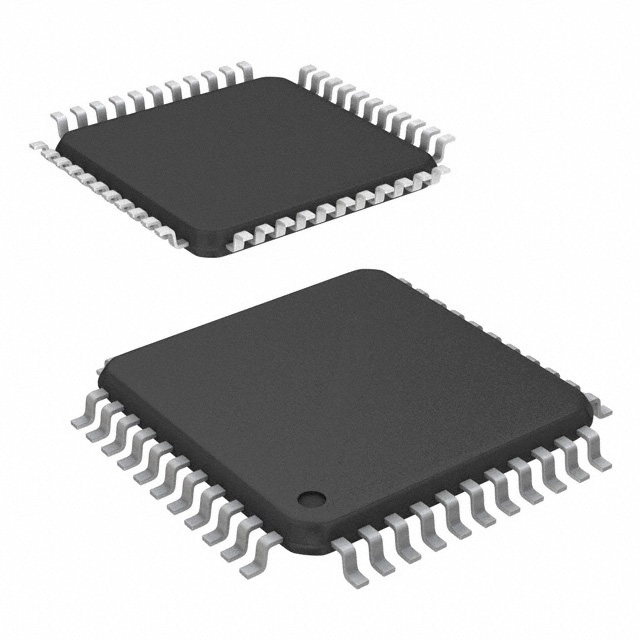
- Part No.:
- ATMEGA32A-AU
- Manufacturer:
- Microchip Technology
- Package:
- 44-TQFP
- Datasheet:
- ATMEGA32A-AU.pdf
- Description:
- IC MCU 8BIT 32KB FLASH 44TQFP
- Quantity:
-
Original Supply
Strict supplier screening and quality control support.
-
Datasheet Support
Help engineers quickly verify product specifications.
-
BOM Sourcing
Support multi-part procurement and RFQ matching.
ATMEGA32A-AU – 8-Bit AVR Microcontroller | Datasheet, Pinout, Specifications & Applications
ATMEGA32A-AU – 8-Bit AVR Microcontroller with 32KB Flash and 16MHz CPU
Complete technical guide to the Microchip ATMEGA32A-AU, including features, memory architecture, TQFP-44 package, pinout, electrical specifications, equivalent devices, manufacturer information, and embedded system applications.
01. Product Introduction
The ATMEGA32A-AU is an 8-bit AVR microcontroller manufactured by Microchip Technology. Based on the enhanced RISC architecture, it combines processing performance, integrated peripherals, and nonvolatile memory in a compact surface-mount package.
The microcontroller features 32KB of in-system programmable Flash memory, 2KB of SRAM, and 1KB of EEPROM. Operating at clock frequencies up to 16MHz, the device delivers processing performance approaching 16 MIPS.
Designed for embedded control applications, the ATMEGA32A-AU integrates 32 programmable I/O lines, an eight-channel 10-bit analog-to-digital converter, programmable timers, PWM channels, USART, SPI, and a two-wire serial interface.
Its 2.7V to 5.5V operating voltage range supports a variety of low-voltage digital systems. The TQFP-44 package provides access to the device's integrated peripheral functions while maintaining a relatively compact PCB footprint.
The ATMEGA32A-AU is suitable for industrial control, sensor interfaces, electronic instrumentation, consumer devices, and embedded automation systems.
02. Key Benefits
- Efficient AVR Architecture: Executes many instructions within a single clock cycle, delivering up to 16 MIPS at 16MHz.
- Integrated Memory: Provides 32KB Flash, 2KB SRAM, and 1KB EEPROM for program storage, runtime data, and persistent settings.
- Flexible Peripheral Connectivity: Supports USART, SPI, and two-wire serial communication.
- Analog Measurement: An integrated 10-bit ADC enables direct interfacing with analog sensors.
- Programmable Control: Four PWM channels and multiple timers support timing and control functions.
- Development Support: In-system programming, JTAG debugging, and AVR development tools simplify firmware development.
- Compact Integration: A 44-pin TQFP package provides 32 programmable I/O lines for embedded hardware.
03. Features
- High-performance 8-bit AVR enhanced RISC CPU.
- 131 powerful instructions, most executing in one clock cycle.
- 32 general-purpose 8-bit working registers.
- Maximum operating frequency of 16MHz.
- Up to 16 MIPS processing throughput.
- 32KB in-system self-programmable Flash memory.
- 2KB internal SRAM.
- 1KB EEPROM for nonvolatile data storage.
- 32 programmable general-purpose I/O lines.
- Eight-channel, 10-bit ADC with additional differential input capabilities.
- Two 8-bit timer/counters.
- One 16-bit timer/counter.
- Four PWM channels.
- Programmable USART serial interface.
- Master/slave SPI interface.
- Two-wire serial interface compatible with I2C-style communication.
- JTAG interface for debugging and programming.
- Programmable watchdog timer.
- Power-on reset and brown-out detection.
- Internal calibrated RC oscillator.
- Six selectable sleep modes.
- Operating supply voltage from 2.7V to 5.5V.
- Industrial operating temperature range of -40°C to +85°C.
04. Package
The ATMEGA32A-AU is supplied in a 44-lead Thin Profile Quad Flat Package (TQFP), suitable for surface-mount electronic assemblies.
| Parameter | Description |
|---|---|
| Part Number | ATMEGA32A-AU |
| Manufacturer | Microchip Technology |
| Package Type | TQFP-44 |
| Package Code | 44A |
| Pin Count | 44 |
| Package Body | 10 × 10mm |
| Nominal Package Height | 1.0mm |
| Mounting Type | Surface Mount |
| Packaging | Tray |
| Operating Temperature | -40°C to +85°C |
The 44-pin package provides access to the MCU's programmable I/O ports and peripheral signals. Proper PCB layout should include supply decoupling capacitors, appropriate analog grounding, and suitable clock routing.
Ordering Note: ATMEGA32A-AU is the tray-packaged TQFP version. ATMEGA32A-AUR identifies the tape-and-reel ordering option.
05. Pinout
The ATMEGA32A-AU uses a 44-pin TQFP configuration with four programmable I/O ports and dedicated power, reset, clock, and analog reference connections.
| Pin Group | Signal | Function |
|---|---|---|
| Port A | PA0–PA7 | General-purpose digital I/O and analog ADC input channels. |
| Port B | PB0–PB7 | Digital I/O with SPI, timer, and PWM-related alternate functions. |
| Port C | PC0–PC7 | Digital I/O with two-wire interface, JTAG, and other alternate functions. |
| Port D | PD0–PD7 | Digital I/O with USART, interrupts, and timer-related functions. |
| Power | VCC | Main digital supply voltage. |
| Ground | GND | Ground reference. |
| Analog Power | AVCC | Analog supply connection for the ADC and related circuitry. |
| Analog Reference | AREF | ADC reference voltage input. |
| Reset | RESET | Active-low external reset input. |
| Clock | XTAL1 / XTAL2 | External crystal, resonator, or clock connections. |
Pin Multiplexing: Many MCU pins provide multiple functions. Enabling a peripheral may change the corresponding pin's availability as general-purpose I/O.
Design Note: The table describes signal groups rather than physical pin numbers. Consult the official Microchip ATmega32A TQFP-44 pin configuration diagram for exact numbered pin assignments before PCB design.
06. Specifications
The following table summarizes the major technical specifications of the ATMEGA32A-AU microcontroller.
| Parameter | Value |
|---|---|
| Part Number | ATMEGA32A-AU |
| Manufacturer | Microchip Technology |
| Product Family | AVR ATmega |
| Processor Architecture | 8-bit AVR RISC |
| Maximum CPU Frequency | 16MHz |
| Maximum Throughput | 16 MIPS |
| Flash Program Memory | 32KB |
| SRAM | 2KB |
| EEPROM | 1KB |
| Supply Voltage | 2.7V – 5.5V |
| Programmable I/O | 32 |
| ADC Resolution | 10-bit |
| Single-Ended ADC Channels | 8 |
| 8-Bit Timers | 2 |
| 16-Bit Timers | 1 |
| PWM Channels | 4 |
| USART Interfaces | 1 |
| SPI Interfaces | 1 |
| Two-Wire Serial Interface | 1 |
| Debug Interface | JTAG |
| Watchdog Timer | Integrated |
| Oscillator | Internal RC / External Clock Options |
| Operating Temperature | -40°C to +85°C |
| Package | 44-TQFP |
| Mounting Type | Surface Mount |
Memory Endurance: The manufacturer specifies 10,000 Flash write/erase cycles and 100,000 EEPROM write/erase cycles under applicable conditions.
Power Consumption: At 1MHz, 3V, and 25°C, typical current consumption is approximately 0.6mA in active mode and 0.2mA in idle mode. Power-down consumption can be below 1µA under specified conditions.
Official Datasheet: ATmega32A Complete Datasheet – Microchip Technology
07. Equivalent
When searching for an ATMEGA32A-AU equivalent, engineers should consider memory capacity, CPU architecture, supply voltage, package dimensions, peripheral availability, firmware compatibility, and physical pin assignments.
| Part Number | Relationship | Replacement Considerations |
|---|---|---|
| ATMEGA32A-AUR | Same device and TQFP-44 package. | Tape-and-reel ordering variant; suitable when the electrical device and package must remain unchanged. |
| ATMEGA32A-PU | Same ATmega32A MCU family. | Uses a 40-pin PDIP package; not mechanically interchangeable with TQFP-44. |
| ATMEGA32A-MU | Same ATmega32A MCU family. | Uses a 44-pad QFN/MLF package; requires different PCB footprint. |
| ATMEGA324PA-AU | Related 8-bit AVR MCU with comparable Flash capacity. | Potential redesign candidate; verify peripheral differences, pin mapping, firmware, and clock requirements. |
Important: ATMEGA32A-AUR is the closest ordering-code alternative for the same TQFP-44 device. Other MCU families should not be treated as drop-in replacements without complete hardware and firmware verification.
When migrating between AVR microcontrollers, engineers should also review interrupt vectors, register definitions, fuse settings, bootloader configuration, and programming tools.
08. Manufacturer
Microchip Technology is a semiconductor manufacturer offering microcontrollers, analog ICs, mixed-signal devices, memory products, and embedded development solutions.
The ATmega32A belongs to Microchip's established AVR microcontroller portfolio. Its architecture originated from Atmel, which became part of Microchip Technology in 2016.
Microchip provides official datasheets, development tools, programming resources, and application documentation to support the design and maintenance of AVR-based embedded systems.
Manufacturer Product Page: Microchip ATmega32A Product Information
Product Lifecycle: Microchip's product page identifies the ATmega32A family as in production. Individual ordering codes and distributor recommendations should be checked before new design commitments or volume purchases.
09. Applications
The ATMEGA32A-AU is suitable for embedded applications that require digital control, analog measurement, peripheral communication, and programmable processing.
- Industrial Automation: Controls relays, monitors digital inputs, and communicates with industrial peripheral devices.
- Sensor Monitoring: Uses the integrated 10-bit ADC to acquire analog measurements from compatible sensors.
- Motor Control: Generates PWM signals for external motor drivers and speed-control circuits.
- Consumer Electronics: Supports programmable user interfaces, control panels, and electronic appliances.
- Measurement Instruments: Performs data acquisition, timing, and digital processing in compact instrumentation.
- Communication Interfaces: Exchanges information with external ICs and modules using USART, SPI, or two-wire communication.
- Embedded Controllers: Implements application-specific logic, status monitoring, and real-time control.
- Educational Development: Provides a practical platform for learning AVR programming, interrupts, timers, ADC operation, and peripheral interfaces.
Application Example: In a temperature monitoring controller, the ATMEGA32A-AU can acquire analog sensor signals through its ADC, process measurements using embedded firmware, and control external indicators or actuators through GPIO or PWM outputs.
Designers should ensure that external loads are driven within the MCU's electrical ratings and use suitable interface circuitry for motors, relays, and higher-voltage systems.
10. Disclaimer
This ATMEGA32A-AU technical guide is intended for product reference, electronic component selection, and general engineering information.
Electrical specifications, package information, and operating conditions should be verified against the latest official Microchip datasheet before purchasing, programming, or integrating the device into a product.
Alternative components listed in this article are provided for preliminary evaluation only. Similar architecture or memory capacity does not guarantee pin-to-pin, electrical, or firmware compatibility.
Product lifecycle status, pricing, availability, and packaging options may change without notice.
All product names, trademarks, and manufacturer identifiers remain the property of their respective owners.