


LM258DT ST Operational Amplifier Guide: Datasheet, Specifications, Applications and Buying Tips
LM258DT is a low-power dual operational amplifier from STMicroelectronics (ST). It integrates two independent, internally frequency-compensated op amps in one compact SO-8 package and is designed for g…
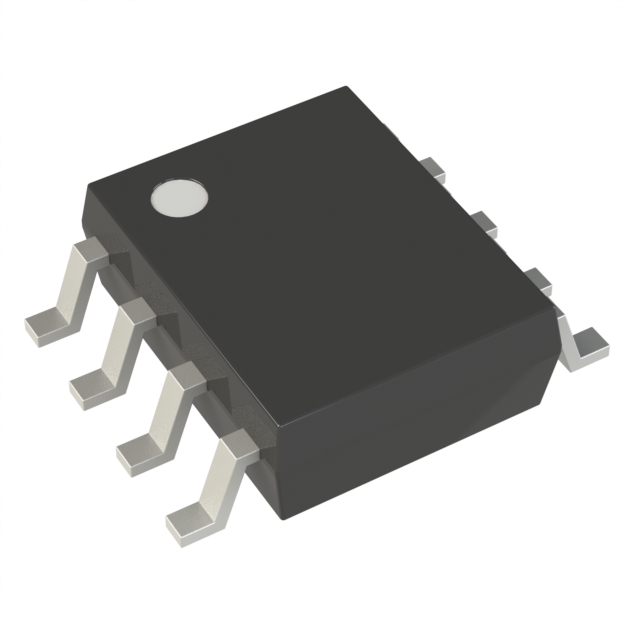
- Part No.:
- LM258DT
- Manufacturer:
- STMicroelectronics
- Package:
- 8-SOIC (0.154", 3.90mm Width)
- Datasheet:
- LM258DT.pdf
- Description:
- IC OPAMP GP 2 CIRCUIT 8SOIC
- Quantity:
-
Original Supply
Strict supplier screening and quality control support.
-
Datasheet Support
Help engineers quickly verify product specifications.
-
BOM Sourcing
Support multi-part procurement and RFQ matching.
LM258DT ST Operational Amplifier Guide: Datasheet, Specifications, Applications and Buying Tips
LM258DT is a low-power dual operational amplifier from STMicroelectronics (ST). It integrates two independent, internally frequency-compensated op amps in one compact SO-8 package and is designed for general analog signal processing, sensor interfaces, DC amplification, industrial control circuits, and many other low-frequency applications.
For engineers and buyers, the most useful way to understand LM258DT is not simply to look at one specification. The real value of this device comes from its combination of low power consumption, a wide supply voltage range, operation with a single power supply, an input common-mode range that includes ground, and a simple dual-amplifier architecture that has been used in electronic designs for many years.
If you are searching for an LM258DT datasheet, planning to buy LM258DT, comparing an LM258DT supplier in China, or trying to identify a high quality LM258DT from ST, this guide explains the important specifications, applications, package information, purchasing risks, and selection points in simple language.
What Is LM258DT?
The LM258DT is a dual general-purpose operational amplifier manufactured by STMicroelectronics. A single LM258DT contains two independent operational amplifier channels. These amplifiers can be used separately or together in the same analog circuit.
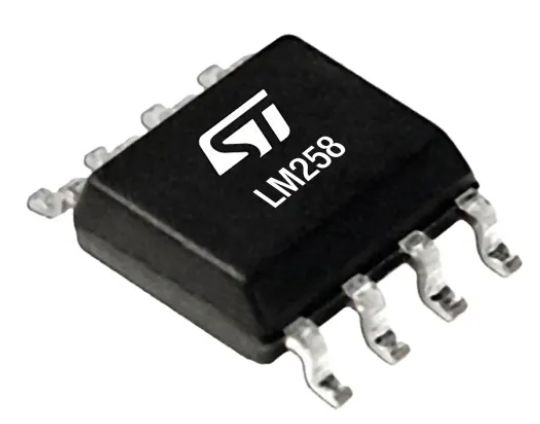
The device belongs to the well-known LM158, LM258 and LM358 operational amplifier family. These parts share a similar basic architecture, but they may have different operating temperature grades, package options, and order codes.
According to ST product information, the LM258 family is designed to operate from a single power supply over a wide voltage range. This feature is important because many older op amp designs required both a positive and negative power supply. LM258DT can simplify a circuit by working from a single supply in many applications.
The DT suffix is also important when sourcing the component. LM258DT is supplied in an SO-8 surface-mount package and is commonly provided in tape-and-reel packaging for automated PCB assembly.
LM258DT Key Specifications at a Glance
| Parameter | LM258DT |
|---|---|
| Manufacturer | STMicroelectronics |
| Part Number | LM258DT |
| Device Type | Dual operational amplifier |
| Number of Amplifiers | 2 |
| Package | SO-8 |
| Mounting Type | Surface mount |
| Nominal Supply Range | Suitable for wide single-supply operation, starting around 3 V |
| Unity-Gain Bandwidth | About 1.1 MHz |
| DC Voltage Gain | About 100 dB |
| Typical Input Bias Current | About 20 nA |
| Typical Input Offset Voltage | About 2 mV |
| Operating Temperature | -40°C to +105°C for LM258DT |
| Grade | Industrial |
| Packaging | Tape and reel |
| RoHS | Compliant / Ecopack |
These specifications make LM258DT suitable for many common analog tasks. However, engineers should always refer to the latest official LM258DT datasheet when calculating limits for a new design. Typical values are useful for understanding the device, but minimum and maximum limits in the datasheet are more important when designing a production circuit.
Why Is LM258DT Still Widely Used?
There are many newer operational amplifiers with lower noise, higher speed, rail-to-rail inputs, or much lower offset voltage. So why do engineers still use the LM258DT?
The answer is simplicity.
LM258DT offers enough performance for a large number of everyday analog circuits without making the design unnecessarily complex or expensive. Many industrial products do not need a 20 MHz or 100 MHz amplifier. They need a stable op amp that can amplify a sensor signal, create a voltage threshold, buffer an analog node, or provide moderate DC gain.
For those tasks, LM258DT remains practical.
Another important reason is design familiarity. Engineers around the world understand the LM258 and LM358 families. There are many reference circuits, legacy designs, development boards, and existing PCB layouts based on these devices.
That can reduce design risk.
LM258DT Datasheet: Which Specifications Matter Most?
When reading an LM258DT datasheet, it is easy to focus on a long table of electrical values. In practice, a smaller group of parameters usually determines whether the device is suitable for your circuit.
1. Supply Voltage
LM258DT supports wide supply operation and can work from a single power source. This makes it useful in systems powered from standard low-voltage rails as well as higher-voltage industrial supplies.
For example, an analog section connected to a 5 V logic system can often use LM258DT without requiring an additional negative supply.
However, supply voltage should never be confused with input signal range. Even if an op amp can operate from a particular supply voltage, its input and output may not be able to reach every voltage between the two supply rails.
2. Input Common-Mode Range
One useful feature of LM258DT is that its input common-mode range includes the negative supply rail, which is often ground in single-supply systems.
This is useful for sensors that produce small signals close to 0 V.
However, LM258DT is not a modern full rail-to-rail input amplifier. Designers should check the upper common-mode limit carefully when the input signal approaches the positive supply voltage.
3. Output Voltage Swing
The output can operate close to the negative rail under suitable load conditions, which is another reason the device works well in single-supply circuits.
On the positive side, the output cannot normally reach the positive supply rail. ST specifies an output range that remains below the positive supply by a certain amount depending on operating conditions.
This detail matters in ADC drivers and sensor circuits. If a microcontroller ADC expects a signal from 0 V to nearly the full supply voltage, you should make sure LM258DT can provide the required output range.
4. Gain Bandwidth
The LM258 family has a unity-gain bandwidth of about 1.1 MHz.
This is enough for many DC and low-frequency analog applications, but it does not make the LM258DT a high-speed amplifier.
A circuit with high closed-loop gain will normally have less available bandwidth. Therefore, designers should calculate the gain-bandwidth relationship instead of assuming the amplifier can process a 1 MHz signal at any gain.
5. Input Bias Current
The typical input bias current is low enough for many standard circuits, but it can still create measurement error when the source impedance is very high.
If you are working with extremely high-impedance sensors, photodiodes, or precision measurement systems, a CMOS or JFET-input amplifier may be a better choice.
6. Input Offset Voltage
LM258DT offers reasonable offset performance for a general-purpose device, but it is not a precision zero-drift amplifier.
Suppose a circuit has a gain of 100. Even a small input offset can become much larger at the output. For high-accuracy measurement systems, this effect needs to be included in the error budget.
LM258DT Pinout and Dual Op Amp Structure
LM258DT uses an 8-pin package and contains two independent operational amplifiers. The standard dual-op-amp arrangement provides separate inputs and outputs for each channel, while both channels share the same power supply connections.
This structure is useful because one IC can perform two analog functions.
For example, one LM258DT channel can amplify a temperature sensor signal while the second channel buffers a reference voltage.
Another design may use one channel as a first-stage amplifier and the second as an active filter.
This reduces component count and saves PCB space compared with using two single-channel operational amplifiers.
Common LM258DT Applications
LM258DT can be found in many types of electronic equipment. Common applications include:
- Sensor signal conditioning
- Transducer amplifiers
- DC gain blocks
- Voltage followers and buffers
- Active filters
- Industrial control boards
- Power supply monitoring
- Battery-powered electronics
- Current measurement circuits
- Temperature measurement circuits
- Motor control boards
- Automation equipment
- Consumer electronics
- Analog interfaces for microcontrollers
LM258DT for Sensor Signal Conditioning
Sensor interfaces are one of the most natural uses for LM258DT.
Many sensors produce an analog voltage that is too small or has the wrong impedance for direct connection to an ADC. An operational amplifier can scale and buffer that signal before it reaches the digital control system.
For example, a sensor might generate only a few hundred millivolts. An LM258DT circuit can amplify this signal into a range that is easier for the ADC to measure.
Because the input common-mode voltage can include ground, the device is useful in circuits where the sensor signal starts near the negative supply rail.
However, designers should calculate offset, noise, gain accuracy, and output swing before using LM258DT in high-precision sensor applications.
LM258DT in Industrial Electronics
The LM258DT version has an industrial operating temperature range extending from approximately -40°C to +105°C.
This makes it more suitable for many industrial environments than consumer-grade op amps limited to a narrower temperature range.
Industrial control boards often need analog functions that are not especially fast but must work reliably over changing temperatures. Examples include monitoring supply rails, amplifying sensor outputs, checking current levels, and filtering analog signals.
In these designs, LM258DT offers a useful balance between performance, availability, and cost.
LM258DT vs LM358: Are They the Same?
LM258DT and LM358 family devices have very similar internal functions, and both are well-known dual general-purpose operational amplifiers.
However, they should not automatically be treated as identical order codes.
One important difference within the ST family is the specified temperature range. LM258 devices are intended for a wider industrial temperature range, while standard LM358 versions may have different temperature specifications depending on the exact part number.
The package suffix also matters.
Therefore, if a BOM specifies LM258DT, a buyer should not replace it with a random LM358 product only because both descriptions say "dual op amp."
Before approving an alternative, compare:
- Operating temperature range
- Package and footprint
- Supply voltage range
- Input common-mode range
- Output swing
- Input offset
- Bias current
- Gain bandwidth
- Slew rate
- Qualification requirements
What Does ST Mean in LM258DT ST?
When buyers search for LM258DT ST or ST LM258DT, "ST" normally refers to STMicroelectronics, the semiconductor manufacturer.
This distinction is important in electronic component sourcing because a generic base number may exist from several manufacturers.
Operational amplifiers from different manufacturers can have similar functions and pinouts while still having different electrical limits, production processes, qualification levels, or packaging specifications.
If your BOM specifically requires STMicroelectronics LM258DT, verify the manufacturer as well as the part number.
How to Buy LM258DT
When searching online for buy LM258DT, the lowest price should not be the only decision factor.
For electronic components, a successful purchase means receiving the correct manufacturer, exact order code, required quantity, suitable date code, acceptable packaging, and traceable product quality.
A professional LM258DT buying process should include several checks.
Check the Complete Part Number
Make sure the quotation clearly states LM258DT.
Do not accept a quotation that only says "LM258" if your BOM requires the DT package version. Different suffixes can represent different package styles or order configurations.
Confirm the Manufacturer
If you need ST product, the manufacturer should be listed as STMicroelectronics.
This is especially important when a purchasing platform groups several compatible components under one search result.
Check the Package
LM258DT is associated with an SO-8 surface-mount package.
A functionally similar amplifier in TSSOP, DFN, MiniSO, or another package will not fit the same PCB footprint without redesign.
Check Packaging Type
For production orders, ask whether the parts are provided in original tape and reel, cut tape, or another packaging form.
Automatic SMT production normally benefits from tape-and-reel packaging.
Ask About Traceability
For critical orders, request available traceability information, manufacturer labels, lot information, and packaging photos before shipment.
Buying LM258DT from China
The search term LM258DT China is common because China has one of the world's largest electronics manufacturing and component trading markets.
Buyers can often find LM258DT through authorized channels, independent distributors, stockists, brokers, and electronic component suppliers located in Shenzhen, Hong Kong, and other electronics hubs.
Buying from China can provide advantages when official distributor stock is limited, when a buyer needs flexible quantities, or when a BOM contains many different component brands that need to be consolidated into one shipment.
However, supplier selection becomes especially important.
A low quotation does not prove that the product is genuine or suitable for production.
When choosing an LM258DT supplier in China, consider whether the company can provide:
- Clear manufacturer information
- Exact part-number confirmation
- Stock photos when required
- Date code and lot information
- Packaging information
- Traceability documents when available
- Quality inspection
- Functional testing options
- International shipping experience
- Professional handling of moisture-sensitive components
How to Identify a High Quality LM258DT
The phrase high quality LM258DT should mean more than a component that looks clean.
Visual inspection is useful, but external appearance alone cannot prove authenticity or electrical performance.
A better quality-control process considers several levels of evidence.
1. Original Packaging
Check the reel, label, moisture barrier packaging, and manufacturer information when original packaging is available.
2. Device Marking
The top marking should be consistent with the expected ST product and package.
Uneven laser marking, unusual fonts, inconsistent positioning, or obvious resurfacing can be warning signs, although visual differences alone should not be used as final proof.
3. Physical Inspection
Inspect the package body, leads, plating, mold marks, and pin condition.
Signs of oxidation, solder residue, bent leads, resurfacing, or poor storage may indicate handling problems or previous use.
4. Electrical Testing
For higher-risk purchases, electrical testing provides stronger evidence than visual inspection alone.
Testing may include supply current, offset voltage, basic gain behavior, input/output operation, and other parameters relevant to the application.
5. Supply Chain Records
A high-quality component is also a component with a reliable sourcing history.
Parts obtained through traceable channels generally present lower procurement risk than components with unknown origin.
Why the LM258DT Datasheet Should Be Checked Before Substitution
Component substitution is common when stock is limited, but matching the pinout is only the first step.
Two op amps can both be dual-channel devices in an SO-8 package and still behave differently in a real circuit.
Before replacing LM258DT, compare the candidate's datasheet with the original ST LM258DT datasheet.
Important points include supply voltage, common-mode range, output swing, slew rate, gain bandwidth, input bias current, offset voltage, temperature range, and stability.
This is particularly important in old industrial equipment. A newer "better" op amp may be faster, but greater bandwidth can sometimes change circuit stability or increase sensitivity to PCB layout.
Better specifications on paper do not always mean a drop-in replacement will behave better in an existing design.
One Important LM258DT Design Limitation
A useful way to understand LM258DT is to know what it is not.
It is not a modern rail-to-rail precision amplifier.
Its ability to operate near ground is useful, but designers should not assume both input and output can move freely from exactly 0 V to exactly the positive supply rail.
This becomes important when LM258DT is connected to modern microcontrollers operating from low supply voltages.
For example, if a circuit uses a low-voltage ADC and needs nearly the full ADC input range, a rail-to-rail operational amplifier may provide more usable signal range.
On the other hand, if the signal stays comfortably inside the LM258DT input and output limits, changing to a more expensive amplifier may provide little practical benefit.
Is LM258DT Good for High-Frequency Signals?
LM258DT is a general-purpose low-frequency operational amplifier rather than a high-speed op amp.
Its approximately 1.1 MHz unity-gain bandwidth is suitable for many sensor, control, DC, and audio-frequency tasks, but high-frequency communications and fast pulse applications usually need a different amplifier.
This is an important distinction when searching for "LM258DT high performance."
High quality does not mean high speed.
A genuine, high-quality LM258DT can perform exactly as designed while still being unsuitable for a circuit that requires tens or hundreds of megahertz of bandwidth.
LM258DT for a New Design: Should You Use It?
The answer depends on the design goal.
LM258DT remains a sensible choice when:
- The circuit is low frequency.
- Low cost is important.
- Single-supply operation is needed.
- Signals operate near ground.
- Extreme precision is not required.
- The SO-8 package fits the PCB design.
- The industrial temperature range is useful.
- The existing circuit already uses the LM258 family.
You may want to consider another op amp when:
- True rail-to-rail input and output are required.
- Very low offset is necessary.
- Very low noise is required.
- High-speed operation is needed.
- Ultra-low supply current is critical.
- The system operates from very low supply voltage.
- Automotive qualification is specifically required.
LM258DT Purchasing Checklist
Before placing an order, use the following quick checklist:
- Part number: LM258DT
- Manufacturer: STMicroelectronics
- Type: Dual operational amplifier
- Package: SO-8
- Mounting: Surface mount
- Temperature grade: Confirm industrial requirements
- Packaging: Confirm tape and reel or cut tape
- Quantity: Confirm available stock before payment
- Date code: Ask when important to your project
- Quality: Request traceability or inspection information when necessary
- Datasheet: Verify specifications against the latest ST document
LM258DT FAQ
What is LM258DT?
LM258DT is an STMicroelectronics low-power dual operational amplifier. It contains two independent op amp channels in an SO-8 surface-mount package and is suitable for many general analog and industrial applications.
Who manufactures LM258DT?
LM258DT is manufactured by STMicroelectronics. Buyers often search for it using terms such as ST LM258DT or LM258DT ST.
What package does LM258DT use?
LM258DT uses an SO-8 surface-mount package. The exact suffix should be checked when ordering because other LM258 family versions may use different packages.
How many amplifiers are inside LM258DT?
There are two independent operational amplifier channels inside one LM258DT device.
What is the LM258DT operating temperature range?
The ST LM258DT industrial version is specified for operation from approximately -40°C to +105°C.
What is the LM258DT gain bandwidth?
The LM258 family has a unity-gain bandwidth of approximately 1.1 MHz, making it suitable for many low-frequency analog applications rather than high-speed signal processing.
Where can I download the LM258DT datasheet?
The safest source for the LM258DT datasheet is the official STMicroelectronics product documentation. Distributor datasheet links can also be useful, but engineers should check the document revision when designing a production circuit.
Where can I buy LM258DT?
You can buy LM258DT through STMicroelectronics, authorized distributors, and experienced independent electronic component suppliers. Availability, minimum order quantity, packaging, price, and lead time can vary by supplier.
Can I buy LM258DT from China?
Yes. Many electronic component distributors and independent suppliers in China offer LM258DT. For production orders, verify the exact ST part number, packaging, stock condition, traceability, and quality-control process before purchasing.
How do I find a high quality LM258DT supplier?
Choose a supplier that can clearly confirm the manufacturer and complete part number, provide packaging and lot information when available, perform incoming quality inspection, and support additional testing for higher-risk orders.
Is LM258DT a high-speed op amp?
No. LM258DT is a general-purpose operational amplifier with about 1.1 MHz unity-gain bandwidth. It is well suited to many sensor, DC, control, and low-frequency analog circuits, but it is not designed for high-speed signal processing.
Is LM258DT suitable for a 5V circuit?
Yes, many LM258 applications use a standard 5 V single supply. However, engineers must still check the input common-mode range and output swing to ensure the actual signal remains within valid operating limits.
Is LM258DT rail-to-rail?
No. Its input common-mode range includes the negative supply rail, making it useful near ground, but the device is not a full rail-to-rail input and output amplifier. The positive-side input and output limits should be checked in the datasheet.
Can LM258DT replace LM358DT?
LM258 and LM358 family parts are closely related, but replacement should not be approved only from the family name. Compare temperature rating, manufacturer, package, electrical specifications, qualification level, and your actual circuit conditions before substitution.
Final Thoughts on LM258DT
LM258DT is a practical example of an electronic component that remains useful because it solves common analog problems without unnecessary complexity.
It combines two operational amplifiers, single-supply capability, operation close to ground, moderate bandwidth, low input bias current, and an industrial temperature range in a familiar SO-8 package.
For engineers, the key is to use LM258DT where its performance fits the design rather than expecting it to behave like a modern precision or high-speed rail-to-rail amplifier.
For procurement teams, the most important lesson is equally simple: do not buy only by price or by the base name "LM258." Confirm the complete LM258DT order code, ST manufacturer, SO-8 package, packaging type, stock condition, and quality requirements.
If you are comparing an LM258DT China supplier, looking for an official LM258DT datasheet, or preparing to buy high quality ST LM258DT in production quantities, combining technical verification with supply-chain verification is the safest approach.
In short: LM258DT is a low-power dual ST operational amplifier designed for reliable general-purpose analog work. Use the datasheet to verify the design, and use a qualified supplier to verify the component.