

Battery Replacement Trends: Why Car Batteries, Lithium Batteries and Replacement Costs Are Gaining Attention
Battery replacement has become an important search topic across automotive electronics, consumer devices and portable electronic equipment. From car battery replacement and lithium battery solutions to small button cells used in everyday products, consumers are increasingly looking for reliable information about battery life, replacement costs and maintenance methods.
Keyword research highlights several closely related search interests, including "battery replacement," "car battery," "how to change car battery," "car battery replacement cost" and "how to test car battery." Other popular search terms include CR2032 battery, LR44 battery, iPhone battery and Samsung battery.
These searches reveal an important opportunity for the electronics industry: battery replacement is no longer limited to automotive maintenance. It is also closely connected to portable electronics, battery technology, electronic components and long-term product maintenance.
1. Car Battery Replacement Remains an Important Search Topic
Car batteries play a critical role in modern vehicles. They supply the electrical energy required to start the engine and support electronic systems when the engine is not running.
As vehicles become increasingly dependent on electronic control units, sensors, infotainment systems and advanced electrical equipment, maintaining battery performance becomes essential.
Several related keywords demonstrate strong search interest:
- Car battery
- Car battery replacement
- How to change car battery
- Car battery replacement cost
- How to test car battery
- Interstate battery
- AutoZone battery
For consumers, the most important questions are usually practical. How long does a car battery last? How can battery condition be tested? When should a battery be replaced? How much does replacement cost?
Battery condition can be evaluated through voltage measurements, load testing and professional battery diagnostic equipment. Replacement decisions should consider battery chemistry, capacity, cold-cranking performance, physical dimensions and vehicle manufacturer requirements.
2. Battery Replacement Cost: What Determines the Price?
Battery replacement cost is another important search category because the final price depends on several technical and commercial factors.
For automotive applications, replacement costs can vary according to battery technology, vehicle requirements, battery capacity, brand and installation services.
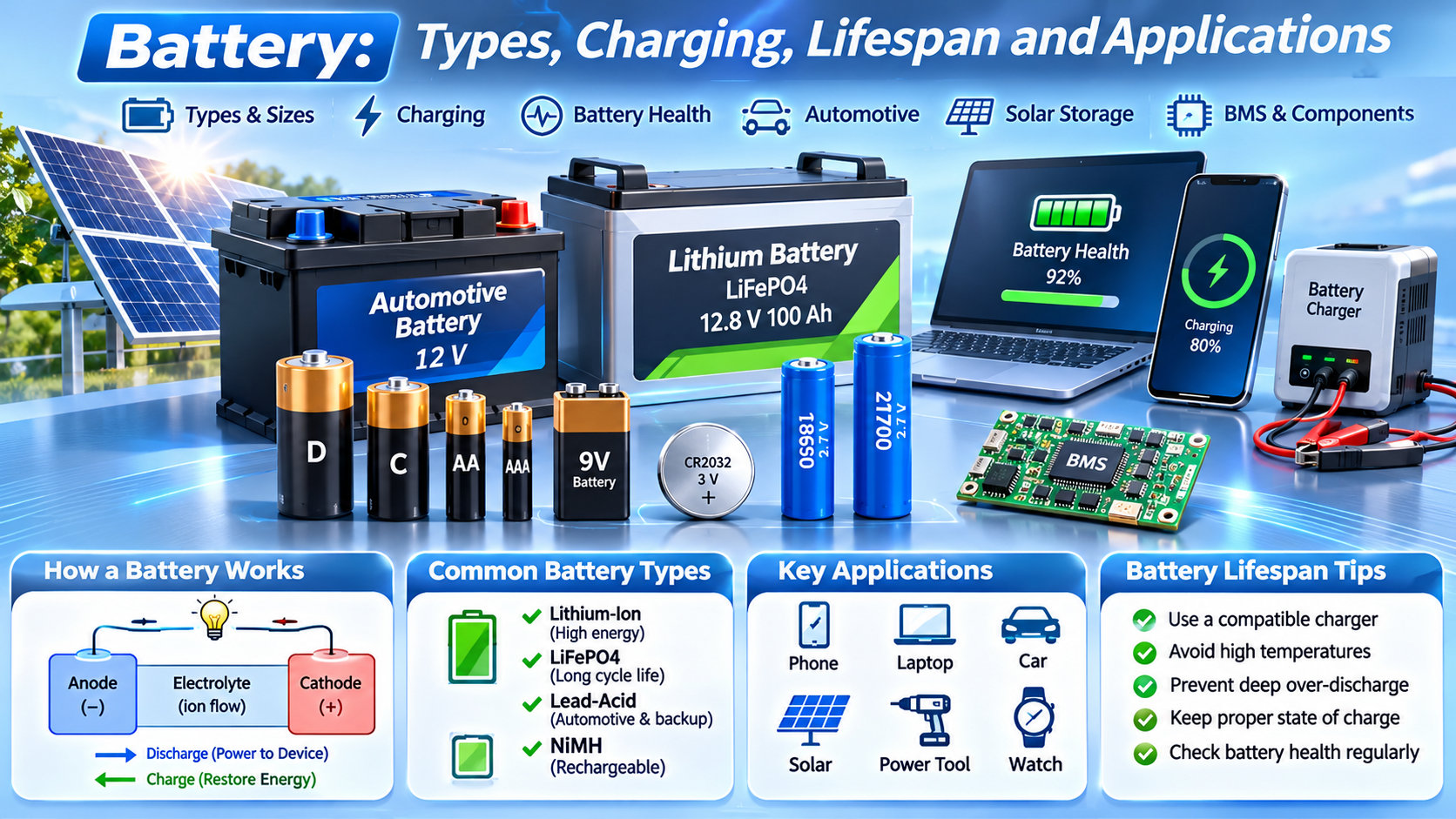
Common automotive battery categories include:
- Flooded Lead-Acid Batteries: Traditional automotive batteries widely used in conventional vehicles.
- AGM Batteries: Absorbent Glass Mat batteries designed for improved performance in many start-stop and higher electrical-demand applications.
- EFB Batteries: Enhanced Flooded Batteries commonly used in certain start-stop vehicle systems.
- Lithium Batteries: Lithium-based solutions used in selected automotive and auxiliary power applications.
Consumers should not select a replacement battery based on price alone. Compatibility, capacity, terminal arrangement, dimensions and charging-system requirements are equally important.
3. Lithium Battery Technology Expands Replacement Opportunities
Lithium battery technology is an important part of the modern electronics industry. Its combination of high energy density, rechargeable performance and relatively low weight makes it suitable for many portable electronic applications.
Search terms such as lithium battery, ion battery, battery pack and battery replacement reflect the wide range of applications connected to rechargeable battery technology.
Lithium-based batteries are commonly found in:
- Smartphones and tablets
- Laptops and portable computers
- Wireless electronic devices
- Portable power stations
- Battery-powered industrial equipment
- Electric mobility products
- Energy storage systems
However, lithium battery replacement requires careful attention to battery chemistry, voltage, capacity, protection circuitry and physical compatibility. Battery packs may also contain battery management systems (BMS) that monitor charging, discharging, temperature and protection conditions.
For electronics manufacturers, these requirements create continued demand for battery management ICs, protection components, MOSFETs, voltage regulators and power management semiconductors.
4. CR2032 and LR44: Small Batteries with Wide Applications
Not every battery replacement involves a vehicle or rechargeable lithium battery. Small button and coin cells remain important power sources for many compact electronic products.
Two frequently searched battery categories are CR2032 and LR44.
CR2032 Battery
The CR2032 is a 3V lithium coin cell commonly used in low-power electronic devices. Typical applications include:
- Car remote keys
- Computer motherboard CMOS backup circuits
- Digital watches
- Calculators
- Small electronic sensors
- Memory backup applications
LR44 Battery
The LR44 is a 1.5V alkaline button cell used in compact electronic products. Typical applications include:
- Small electronic toys
- Calculators
- Digital thermometers
- Small measuring instruments
- Electronic accessories
Although CR2032 and LR44 batteries are both small-format batteries, they are not interchangeable. Their voltage, chemistry, dimensions and electrical characteristics are different.
5. Smartphone Battery Replacement: iPhone and Samsung Devices
Smartphone battery replacement is another important part of the consumer electronics market. As mobile devices are used for longer periods, battery degradation can affect daily performance and operating time.
Searches related to iPhone battery replacement and Samsung battery replacement demonstrate consumer interest in extending the useful life of smartphones.
Rechargeable lithium-ion batteries gradually lose capacity through normal charge and discharge cycles. Factors such as temperature, charging conditions, usage patterns and battery age can influence long-term performance.
When considering smartphone battery replacement, users should evaluate:
- Battery compatibility with the exact phone model
- Original battery specifications and capacity
- Protection and temperature monitoring functions
- Installation quality
- Manufacturer service recommendations
For modern smartphones, battery replacement is not simply a matter of selecting a battery with the same physical size. Electrical compatibility and device-level safety functions are also important.
6. Electronic Components Behind Modern Battery Systems
Behind every modern battery-powered product is a collection of electronic components responsible for power conversion, protection, monitoring and control.
Battery-related electronic designs commonly use several semiconductor and passive component categories:
- Battery Management ICs: Monitor battery voltage, current and temperature.
- MOSFETs: Control charging and discharging paths and provide switching functions.
- Protection ICs: Help prevent overvoltage, undervoltage and overcurrent conditions.
- Voltage Regulators: Provide stable power rails for processors and other electronic circuits.
- MCUs: Manage battery monitoring, communication and system-level control.
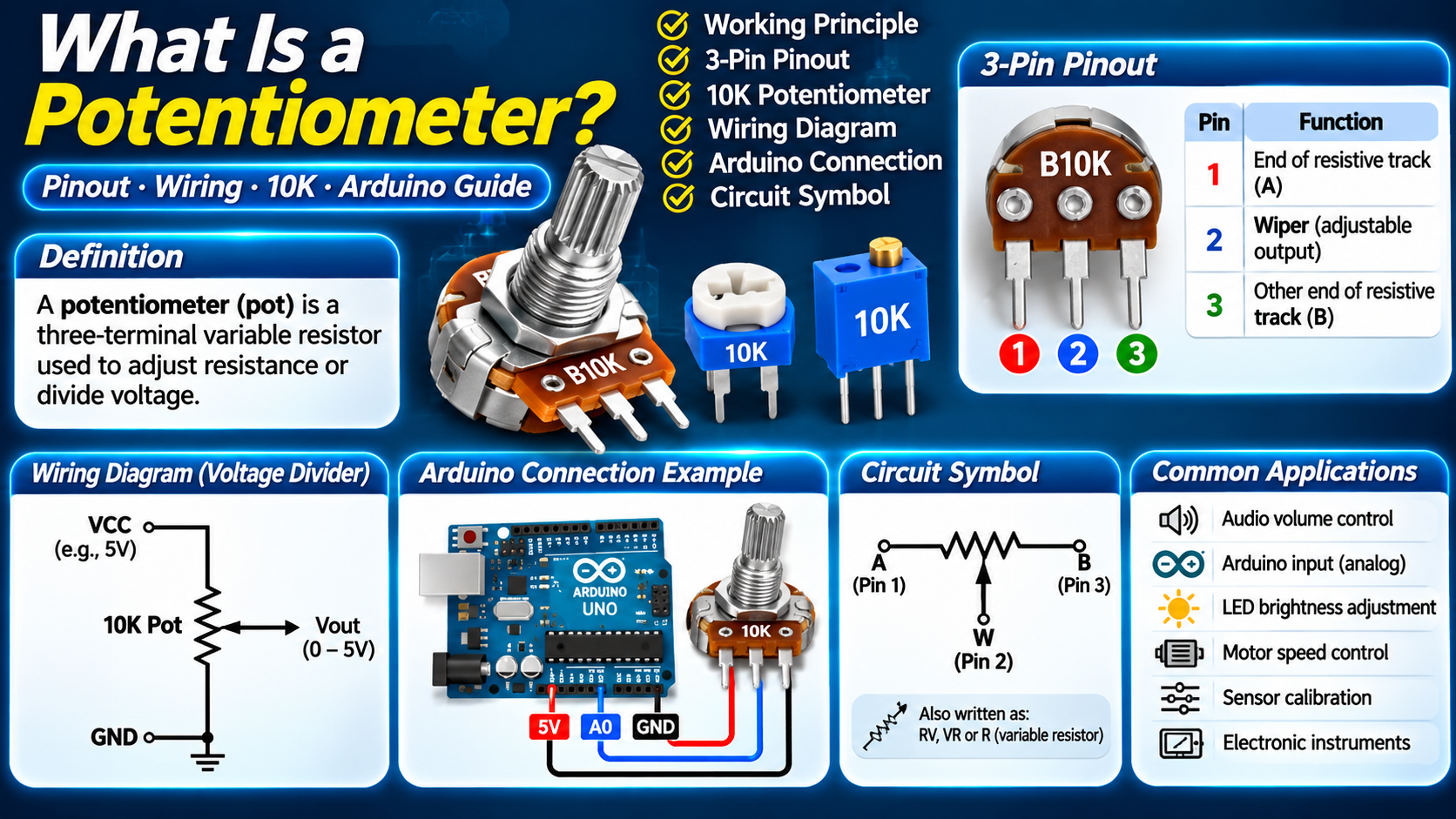
- Capacitors and Resistors: Support filtering, sensing, timing and voltage regulation circuits.
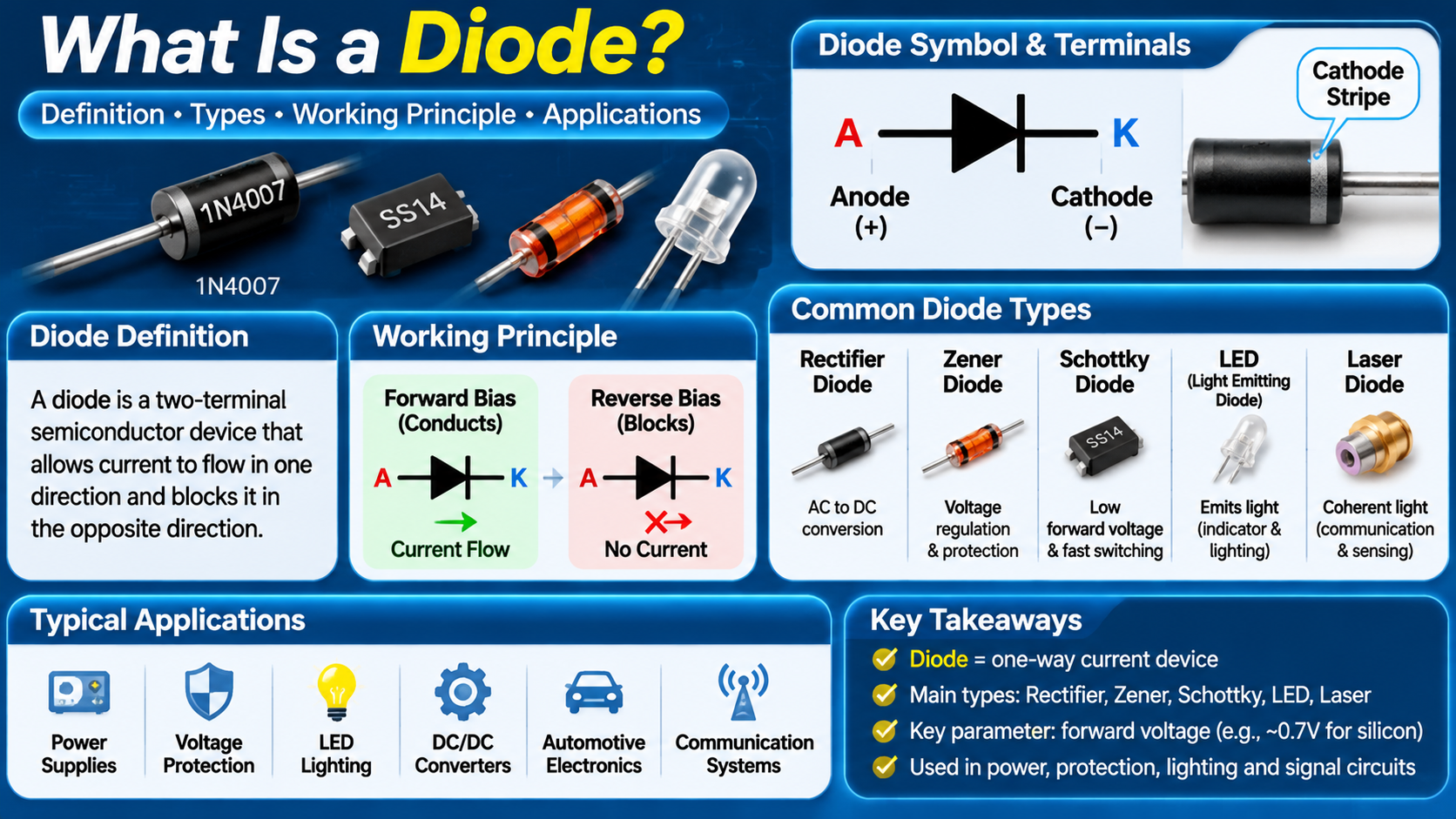
- Diodes and TVS Devices: Provide protection against electrical transients and reverse-polarity conditions in suitable circuit designs.
As battery-powered products become more sophisticated, these components remain important to reliable power management and electronic system design.
7. How to Choose the Right Battery Replacement
Choosing the correct replacement battery requires more than matching a product name. Buyers and engineers should compare several important parameters before purchasing.
- Voltage: Confirm that the replacement battery provides the required nominal and operating voltage.
- Capacity: Compare rated capacity and expected operating time.
- Battery Chemistry: Identify whether the original product uses alkaline, lithium primary, lithium-ion or another chemistry.
- Physical Dimensions: Check length, width, height, diameter and terminal arrangement.
- Protection Features: Confirm whether battery protection or management circuitry is required.
- Application Compatibility: Follow the original equipment manufacturer's replacement specifications.
- Supplier Reliability: Purchase from suppliers that can provide traceable products and appropriate technical documentation.
These steps help reduce compatibility problems and improve the reliability of replacement battery solutions.
8. What These Battery Replacement Keywords Mean for the Electronics Industry
The keyword research behind this article reveals several distinct search intentions. Some users are looking for immediate replacement services, while others are comparing battery prices, testing methods or technical specifications.
For electronic component distributors and manufacturers, this creates opportunities to publish more focused technical information rather than relying on a single general battery article.
Potential content categories include:
- Car battery replacement and testing guides
- Battery replacement cost comparisons
- Lithium-ion battery technology explanations
- CR2032 and LR44 battery compatibility guides
- Smartphone battery maintenance articles
- Battery management IC and protection circuit introductions
- Electronic components used in battery-powered equipment
These topics can form a connected content cluster that addresses different stages of the search journey, from general battery information to technical component selection.
Conclusion: Battery Replacement Is More Than a Maintenance Topic
Battery replacement connects automotive maintenance, consumer electronics, rechargeable energy systems and semiconductor technology. Search interest in car battery replacement, lithium batteries, smartphone batteries and small button cells demonstrates how broad this topic has become.
For consumers, choosing the correct replacement battery means understanding compatibility, cost, capacity and safety. For electronics manufacturers and component suppliers, the continued development of battery-powered products creates opportunities across battery management ICs, MOSFETs, protection devices, microcontrollers and power management components.
As electronic products continue to evolve, reliable battery solutions and supporting semiconductor components will remain important parts of the global electronics supply chain.