

How Electronic Components Are Transforming Everyday Life in 2026: AI, Smart Homes, EVs and the Semiconductor Technologies Behind Them
Industry Insight: Artificial intelligence, intelligent home appliances, electric vehicles, wearable technology, and energy-efficient power systems are changing how people interact with electronics. Behind these innovations are essential electronic components, including microcontrollers, integrated circuits, sensors, capacitors, resistors, diodes, and power semiconductors.
Electronic Components Are Becoming More Important in Everyday Life
In 2026, the most significant technology developments are no longer limited to smartphones and computers. Artificial intelligence is entering household appliances, vehicles are becoming increasingly software-defined, wearable devices are collecting more sophisticated sensor data, and energy-efficient electronics are influencing how electricity is consumed.
Behind these developments lies an often-overlooked foundation: electronic components.
Every time someone unlocks a smartphone, adjusts a smart thermostat, charges an electric vehicle, uses a wireless headset, or starts a robotic vacuum cleaner, numerous semiconductor devices and passive components work together to make that experience possible.
A modern electronic product may contain hundreds or thousands of individual components. Some perform calculations, others regulate electrical power, process signals, detect environmental changes, protect circuits, or establish reliable communication between subsystems.
The growing importance of electronic components in everyday life reflects a larger industry transition. Hardware is becoming more intelligent, connected, compact, and energy-efficient.
According to the 2026 technology outlook published by Deloitte, artificial intelligence is reshaping hardware development, from enterprise computing infrastructure to emerging edge-processing systems. Meanwhile, research from the Consumer Technology Association highlights continued interest in intelligent household devices.
For electronics manufacturers, engineers, component distributors, and procurement teams, these trends create opportunities while raising new requirements for product reliability, power efficiency, supply-chain resilience, and long-term component availability.
1. Smartphones: Thousands of Electronic Functions in One Device
Smartphones are among the clearest examples of how different electronic components work together to deliver a sophisticated consumer experience.
A smartphone contains processors, memory devices, wireless communication chips, power management integrated circuits, sensors, capacitors, resistors, filters, connectors, and protection devices.
Although the main application processor receives considerable attention, many supporting components are equally essential for reliable operation.
Power Management ICs
A power management integrated circuit, or PMIC, distributes and regulates electrical power throughout a smartphone.
Different subsystems require different voltage levels. The processor, memory, camera modules, display, wireless transceiver, and audio circuitry may each have specific power requirements.
DC-DC converters and low-dropout regulators help deliver these voltages efficiently. Load switches can disconnect inactive subsystems to reduce unnecessary power consumption.
Efficient power management contributes to battery life, thermal performance, and stable device operation.
Sensors and Signal Processing
Accelerometers and gyroscopes detect movement and orientation. Proximity sensors help identify nearby objects, while ambient light sensors support automatic display brightness adjustment.
Camera image sensors convert incoming light into electrical information that can be processed into photographs and videos.
Analog-to-digital converters, operational amplifiers, and signal-conditioning circuits support the conversion and interpretation of sensor signals.
Capacitors and Resistors
Multilayer ceramic capacitors, commonly called MLCCs, are widely used for power-supply decoupling, filtering, and signal-related functions.
Resistors establish voltage-divider ratios, limit currents, configure control circuits, and support signal termination.
These components may appear simple compared with advanced processors, but their electrical characteristics can directly influence system stability and electromagnetic compatibility.
As smartphones incorporate more on-device AI capabilities, engineers must balance computational performance with battery consumption, heat generation, and limited PCB space.
2. Smart Homes: How Electronic Components Make Houses More Intelligent
Smart home technology is one of the most visible examples of electronics becoming integrated into everyday routines.
Smart thermostats, connected lighting, video doorbells, security cameras, smart plugs, air purifiers, and robotic cleaning systems use electronic components to monitor conditions and respond automatically.
In 2026, the growing role of artificial intelligence is encouraging manufacturers to move beyond simple remote-control functions toward systems that can interpret sensor information and support more adaptive automation.
Microcontrollers as Local Control Centers
A microcontroller unit, or MCU, combines processing capability, memory, and peripheral interfaces in a compact semiconductor device.
In a smart thermostat, an MCU may read temperature sensors, process control settings, communicate with a wireless module, and operate heating or cooling controls.
In a smart lighting system, the controller may adjust brightness, respond to motion detection, and coordinate with other connected devices.
Common microcontroller families used across embedded systems include STMicroelectronics STM32 devices, Microchip PIC and AVR devices, and other application-specific controllers.
Wireless Communication Components
Smart home devices commonly use wireless technologies such as Wi-Fi, Bluetooth Low Energy, Thread, and Zigbee.
Radio-frequency transceivers, oscillators, filters, antennas, and supporting passive components enable these communication links.
Interoperability initiatives such as Matter aim to improve how compatible smart home products work across different ecosystems.
Why Edge AI Matters
Edge AI refers to artificial intelligence processing performed on or near the device that generates the data, rather than sending every task to a remote cloud server.
For example, a compatible smart security camera may analyze movement locally and distinguish relevant events before transmitting notifications.
Local processing can reduce communication requirements and latency, although its privacy and energy benefits depend on the complete product design.
This shift increases demand for capable microcontrollers, embedded processors, memory, sensors, and efficient power-management components.
3. Wearable Electronics: Small Components With Growing Capabilities
Smartwatches, fitness trackers, wireless earbuds, smart glasses, and connected health-monitoring devices demonstrate how electronic components can be integrated into increasingly compact products.
Wearable devices must often perform sensing, computation, communication, and user interaction while operating from relatively small batteries.
This creates significant engineering challenges involving power consumption, thermal management, miniaturization, and sensor accuracy.
Optical and Motion Sensors
Many smartwatches use optical sensing systems to estimate physiological measurements such as heart rate. These systems typically combine light-emitting diodes, photodetectors, analog front-end circuits, and digital processing.
Motion sensors can support activity tracking, orientation detection, and selected safety functions.
Sensor accuracy depends on multiple factors, including mechanical design, signal quality, algorithms, operating conditions, and device placement.
Low-Power Microcontrollers
Low-power MCUs and system-on-chip devices help coordinate sensor measurements and wireless communication while managing battery consumption.
Sleep modes, duty cycling, and selective activation of peripheral circuits allow many wearable devices to remain operational without keeping every subsystem active continuously.
Miniature Passive Components
Compact MLCCs, chip resistors, inductors, and protection components are important for high-density wearable PCB designs.
Component size alone is not the only consideration. Engineers must also evaluate capacitance derating, temperature characteristics, mechanical reliability, and manufacturing constraints.
As AI-enabled wearables expand, the combination of local processing and low-power sensor technology will remain a significant design focus.
4. Electric Vehicles: Power Semiconductors and Automotive Electronics
Electric vehicles illustrate how electronic components influence transportation, energy efficiency, and vehicle functionality.
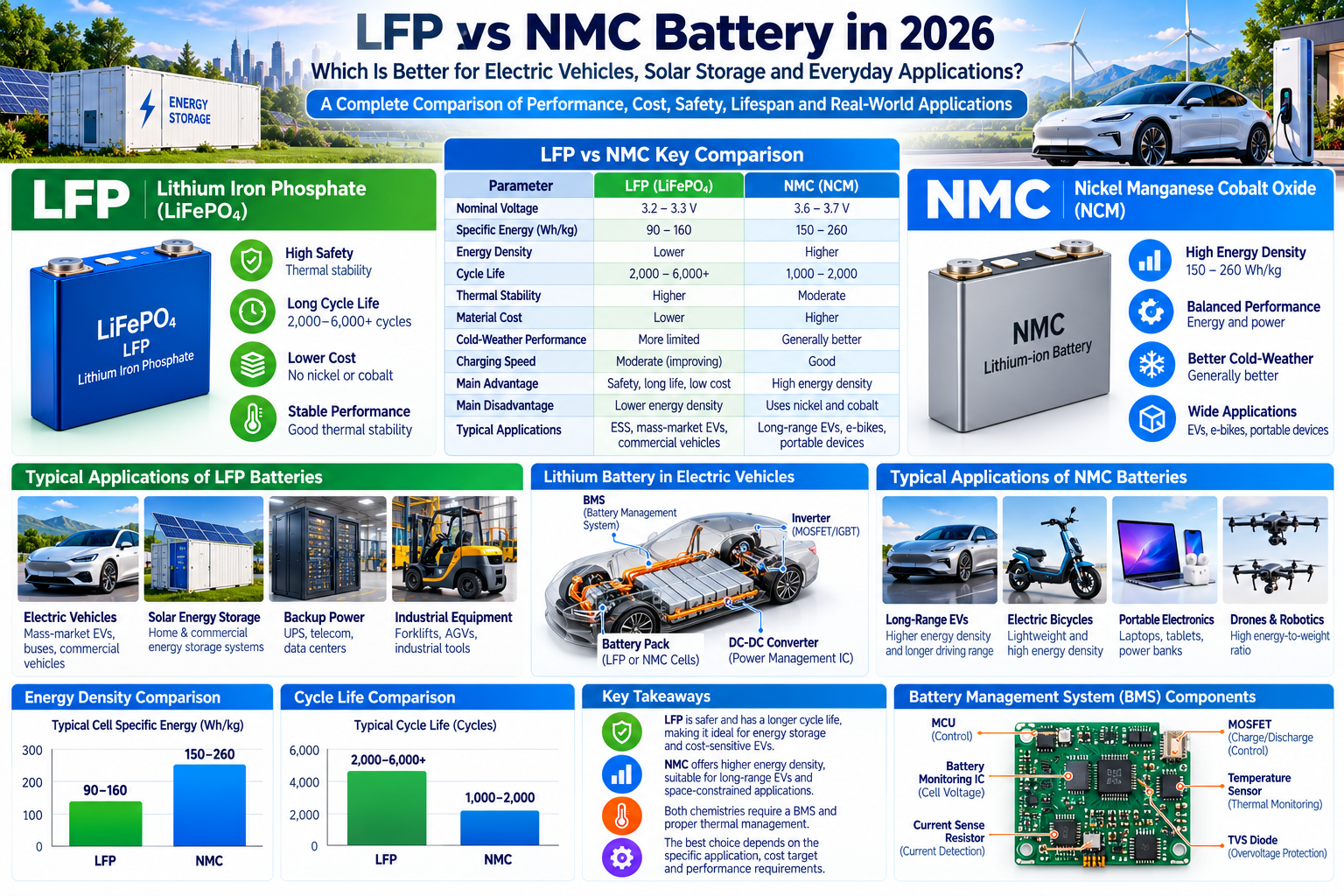
An electric vehicle contains numerous electronic subsystems, including traction inverters, battery management systems, onboard chargers, DC-DC converters, lighting controllers, communication networks, and driver-assistance electronics.
Each subsystem requires components selected for its electrical, thermal, and reliability requirements.
Power MOSFETs and IGBTs
Power MOSFETs and insulated-gate bipolar transistors, or IGBTs, control electrical energy in many power-conversion applications.
In automotive systems, power switching devices are used in motor drives, voltage converters, and auxiliary power circuits.
Gate-driver ICs provide the control signals and peak drive currents needed to operate suitable power transistors.
Silicon Carbide Technology
Silicon carbide, or SiC, is an important wide-bandgap semiconductor material used in high-voltage power electronics.
Compared with conventional silicon devices in appropriate applications, SiC power devices can support lower switching losses and high-temperature operation.
These characteristics make SiC attractive for certain electric vehicle traction inverters and high-power charging systems.
However, the actual efficiency and cost advantages depend on device selection, switching frequency, thermal design, and the overall system architecture.
Battery Management Systems
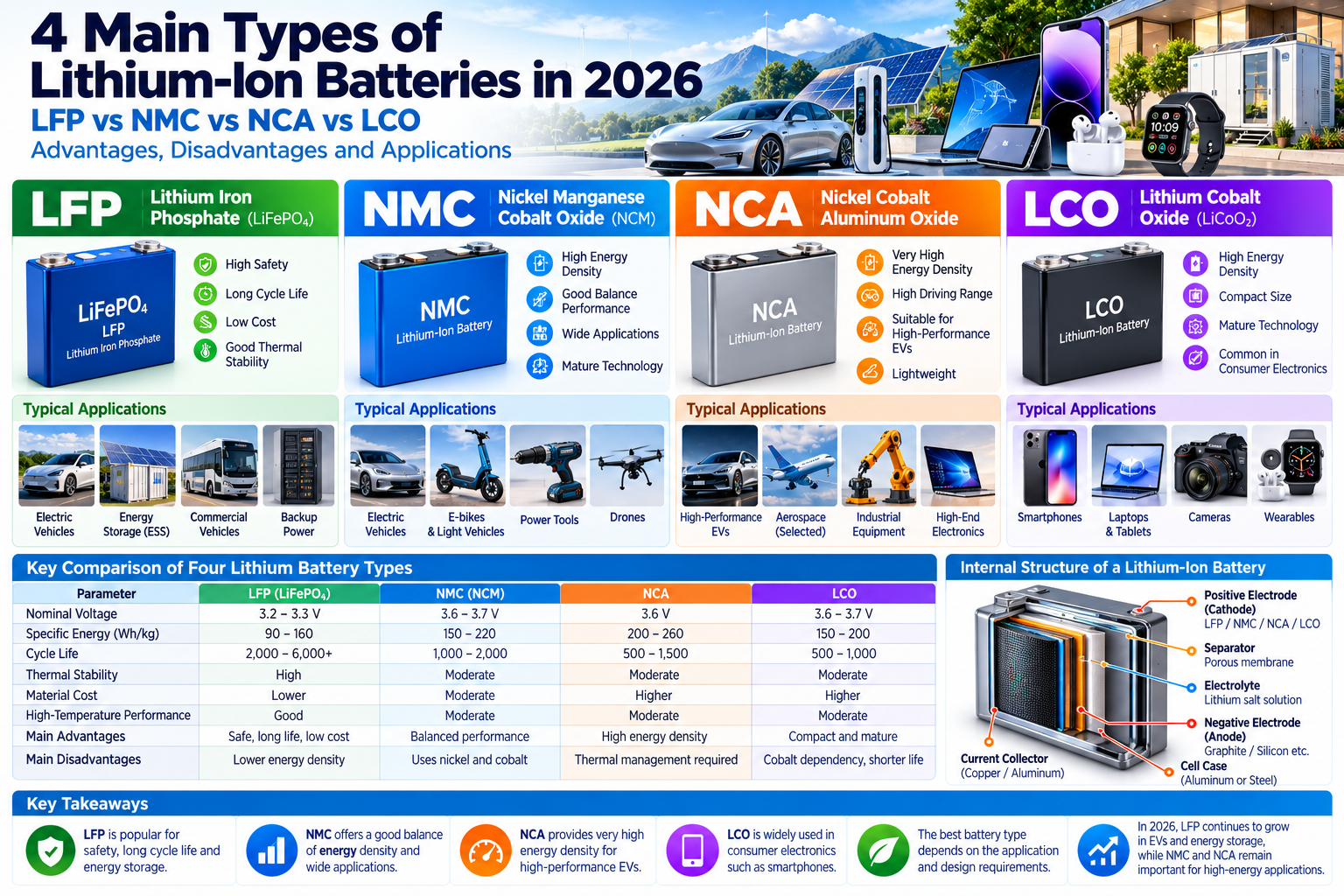
A battery management system monitors battery-cell voltages, temperatures, and other operating conditions.
Battery-monitoring ICs, temperature sensors, current-sensing circuits, microcontrollers, isolation components, and protection devices work together to support battery operation.
Accurate monitoring and protective control are important for battery performance, safety, and service life.
Automotive-Grade Components
Automotive electronics may experience wide temperature variations, electrical transients, vibration, and demanding service conditions.
Components qualified under applicable automotive standards, including relevant AEC-Q specifications, help manufacturers evaluate device reliability.
Qualification is only one part of system-level validation. Circuit protection, thermal management, and application-specific testing remain essential.
5. Fast Charging and Energy Efficiency: Why Power Components Matter
Power conversion is a central function in everyday electronics.
Smartphone chargers, laptop adapters, household appliances, solar energy systems, and electric vehicle charging equipment all require circuits that convert electrical energy between voltage and current levels.
As products demand greater power density and improved efficiency, power semiconductor technology becomes increasingly important.
Gallium Nitride in Modern Power Conversion
Gallium nitride, or GaN, is a wide-bandgap semiconductor technology used in selected high-frequency power-conversion applications.
GaN transistors can enable high switching speeds and potentially reduce switching losses compared with suitable silicon alternatives.
These characteristics can help designers create compact, efficient power supplies when supported by appropriate magnetic components, gate drivers, PCB layouts, and thermal management.
GaN is not automatically superior in every application. Voltage rating, cost, electromagnetic interference, and circuit topology all influence the engineering decision.
DC-DC Converters
DC-DC converters adjust one DC voltage level to another.
Buck converters reduce voltage, boost converters increase voltage, and other topologies support more complex conversion requirements.
These circuits typically contain switching transistors, controller ICs, inductors, capacitors, resistors, and protection devices.
For example, a battery-powered product may use a buck converter to generate a regulated supply for its microcontroller and communication circuitry.
Protection Components
Transient voltage suppressor diodes, commonly called TVS diodes, help protect sensitive circuits against specified transient overvoltage events.
Fuses provide overcurrent protection when properly selected and coordinated with the circuit.
Schottky diodes may be used for rectification, polarity-related functions, and other applications where their forward-voltage and switching characteristics are advantageous.
These devices support system reliability, but each protection component must be selected for the actual electrical threat and applicable safety requirements.
6. Robotics and Automation: Electronic Components Behind Intelligent Movement
Robotics is another area where advances in semiconductors are creating new applications.
Robotic vacuum cleaners, automated warehouse equipment, industrial robots, and emerging service robots combine sensing, computation, motor control, and electrical power management.
A robot must interpret its environment and translate control decisions into physical movement.
Motor Drivers
Motor-driver ICs control the current delivered to electric motors.
Depending on the motor type, the driver may use an H-bridge, three-phase bridge, stepper motor controller, or another power-stage architecture.
Stepper motor drivers can provide controlled positioning, while brushless DC motor controllers support efficient rotational motion in many applications.
Motion and Environmental Sensors
Robots may use inertial measurement units, optical sensors, cameras, encoders, proximity sensors, and other devices to understand movement and surroundings.
Sensor fusion combines information from multiple sources to support more reliable state estimation.
Embedded Processing and AI
Microcontrollers commonly handle time-sensitive functions such as motor control and sensor sampling.
More capable embedded processors or AI accelerators may perform computationally demanding tasks such as visual recognition, navigation, and object classification.
The resulting hardware architecture depends on the robot's required performance, power budget, cost, and safety constraints.
As physical AI develops, demand may increase for efficient motor drivers, power-management ICs, sensors, memory, and embedded processing devices.
7. Essential Electronic Components and Their Everyday Functions
Despite rapid changes in semiconductor technology, many fundamental component categories remain essential.
| Electronic Component | Primary Function | Everyday Applications |
|---|---|---|
| Microcontroller (MCU) | Embedded control and processing | Smart appliances, thermostats, motor controllers |
| Integrated Circuit (IC) | Signal processing, control, communication, and other functions | Smartphones, computers, household electronics |
| Resistor | Current limiting, voltage division, and biasing | Nearly all electronic circuit boards |
| Capacitor | Energy storage, filtering, and decoupling | Chargers, smartphones, power supplies |
| Inductor | Magnetic energy storage and filtering | DC-DC converters and power circuits |
| Diode | Rectification and controlled current conduction | Power adapters and protection circuits |
| TVS Diode | Transient overvoltage suppression | USB ports, automotive interfaces, industrial equipment |
| MOSFET | Electronic switching and power control | Chargers, motor drives, battery systems |
| Sensor | Measurement of physical conditions | Wearables, smart homes, vehicles |
| Memory IC | Data and program storage | Computers, routers, embedded systems |
| Gate Driver | Control of power-transistor gates | Motor controllers and switching power supplies |
| Fuse | Overcurrent protection | Appliances, batteries, and electrical equipment |
The performance of a complete electronic system depends on how these components interact, not simply on the capabilities of its most advanced chip.
For instance, a high-performance processor still requires stable power rails, adequate decoupling, reliable memory, thermal management, and correctly designed interfaces.
This explains why passive components and supporting analog devices remain relevant even as AI accelerators and advanced processors attract most of the public attention.
8. Semiconductor Industry Trends in 2026: What Is Changing?
Several industry developments are influencing electronic component demand and design priorities in 2026.
Trend One: AI Is Moving Toward Everyday Devices
Edge AI allows selected processing tasks to run locally in cameras, appliances, wearables, industrial equipment, and vehicles.
This increases the importance of embedded processors, memory architecture, sensor interfaces, and efficient power management.
However, local AI adoption varies by product category, and not every connected device requires dedicated AI hardware.
Trend Two: Energy Efficiency Is Becoming a Major Design Priority
Power consumption is increasingly important across consumer electronics and large-scale computing infrastructure.
Designers are evaluating power-management architectures, switching devices, magnetic components, and thermal solutions to reduce energy losses.
SiC and GaN technologies are receiving attention in applications where their electrical characteristics can justify their system-level cost.
Trend Three: Intelligent Products Require More Sensors
Smart home systems, wearable electronics, and robotic devices rely on sensor information to support context-aware operation.
This creates opportunities for sensor manufacturers as well as suppliers of analog front-end ICs, signal-conditioning devices, microcontrollers, and passive components.
Trend Four: Reliability and Traceability Matter More
As electronics become integrated into vehicles, industrial equipment, and critical infrastructure, component sourcing and documentation become increasingly important.
Engineers and procurement teams must consider device authenticity, qualification requirements, lifecycle status, and manufacturer traceability.
Trend Five: Semiconductor Demand Is Becoming More Specialized
The expansion of AI computing, automotive electrification, and intelligent devices does not affect every semiconductor category equally.
Demand patterns differ among processors, memory, power semiconductors, analog ICs, microcontrollers, and passive components.
Component buyers should therefore avoid assuming that growth in one semiconductor segment automatically indicates higher demand or prices across the entire market.
9. What These Trends Mean for Electronic Component Selection and Procurement
For electronics manufacturers and purchasing teams, the growth of intelligent devices creates opportunities but also increases sourcing complexity.
A component that appears electrically suitable may still be inappropriate because of package differences, qualification requirements, thermal performance, or product lifecycle considerations.
Review the Complete Datasheet
Electrical parameters should be evaluated under their specified operating conditions.
For example, the current rating of a MOSFET, regulator, or motor driver cannot be interpreted independently of package thermal resistance, ambient temperature, and PCB design.
Verify Exact Part Numbers
Manufacturer suffixes can identify package types, temperature grades, reel quantities, qualification variants, and other ordering characteristics.
Two part numbers from the same family should not automatically be considered interchangeable.
Evaluate Replacement Components Carefully
Alternative components should be compared for electrical specifications, physical pin assignments, functional behavior, and software compatibility where applicable.
A replacement may be electrically similar without being a direct pin-to-pin substitute.
Plan for Long-Term Availability
Products intended for long service lives may require lifecycle monitoring and approved alternate sources.
Maintaining accurate bills of materials, manufacturer documentation, and purchasing records helps reduce unnecessary redesign and supply-chain risk.
Balance Price With Reliability
The lowest quoted unit price does not always represent the lowest overall cost.
Manufacturing yield, quality documentation, counterfeit risk, component failure rates, and replacement availability can influence the true cost of ownership.
For companies developing smart home devices, industrial equipment, automotive modules, and connected products, disciplined component selection remains a competitive advantage.
10. Future Outlook: The Next Generation of Everyday Electronics
The next stage of electronics development is likely to focus on combining intelligent processing with efficient energy use and dependable connectivity.
Several technology directions deserve attention.
- Low-power AI microcontrollers: Embedded processors capable of handling selected inference tasks without continuous cloud communication.
- Advanced power-management ICs: Devices supporting efficient voltage conversion, monitoring, and power sequencing.
- Wide-bandgap power semiconductors: GaN and SiC technologies for suitable high-efficiency and high-power applications.
- Miniaturized sensors: Compact sensing devices supporting wearables, smart appliances, and intelligent machines.
- High-reliability passive components: Capacitors, resistors, and inductors designed for demanding electrical and environmental conditions.
- Automotive electronics: Power devices, protection circuits, and embedded controllers supporting electrification and advanced vehicle functions.
These developments do not eliminate the need for traditional electronic components. Instead, they increase the importance of choosing the right combination of advanced semiconductor devices and reliable supporting circuitry.
A sophisticated AI-enabled product can still fail because of an improperly selected capacitor, insufficient circuit protection, or inadequate thermal design.
The future of electronics will therefore depend not only on breakthroughs in processing capability, but also on improvements in component integration, power efficiency, manufacturability, and reliability.
11. Frequently Asked Questions
What are electronic components in everyday life?
Electronic components are devices used to control, process, store, measure, or distribute electrical signals and power. Common examples include resistors, capacitors, diodes, transistors, integrated circuits, microcontrollers, and sensors. They are found in smartphones, household appliances, vehicles, chargers, computers, and wearable devices.
What are the most common applications of electronic components?
Common applications include power regulation, signal processing, motor control, wireless communication, battery management, sensing, data storage, and circuit protection.
How are electronic components used in smart homes?
Smart home devices use microcontrollers for control, sensors for environmental measurements, communication chips for connectivity, and power-management components for efficient operation. These components enable functions such as automated lighting, temperature control, security monitoring, and appliance management.
Which electronic components are important for artificial intelligence?
AI systems depend on processors, memory, power-management ICs, and communication devices. Edge AI products may additionally require sensors, microcontrollers, and specialized inference accelerators.
Why are capacitors important in electronic devices?
Capacitors support power-supply filtering, voltage stabilization, energy storage, signal coupling, and decoupling. They are especially important in circuits containing processors, wireless transceivers, and switching power supplies.
What electronic components are used in electric vehicles?
Electric vehicles use power MOSFETs, IGBTs, SiC devices, gate drivers, battery-monitoring ICs, microcontrollers, sensors, capacitors, resistors, protection devices, and communication components.
What is the difference between a microcontroller and a microprocessor?
A microcontroller typically integrates a processor, memory, and peripheral interfaces for embedded control tasks. A microprocessor generally focuses on processing capability and may rely more heavily on external memory and supporting devices. Actual architectures vary by product.
Are GaN and SiC replacing traditional silicon semiconductors?
GaN and SiC are expanding into applications where their performance characteristics offer system-level advantages. Conventional silicon devices remain important because of their cost, maturity, broad availability, and suitability for many electronic designs.
12. Conclusion: Small Electronic Components, Major Changes in Daily Life
From the smartphone in a pocket to the smart appliances inside a home, electronic components influence how people communicate, work, travel, monitor their surroundings, and use electrical energy.
The technology trends of 2026 highlight a clear direction: electronic products are becoming more intelligent, connected, and energy-conscious.
Artificial intelligence is increasing the need for efficient embedded processing. Smart home technology is expanding the role of microcontrollers and sensors. Electric vehicles and modern chargers are creating opportunities for advanced power semiconductors. Wearable electronics continue to depend on miniaturized components and low-power design.
At the same time, traditional components such as resistors, capacitors, diodes, inductors, and protection devices remain essential to the performance of complete electronic systems.
For engineers, manufacturers, and electronic component distributors, understanding these applications is increasingly important for selecting appropriate products, identifying technical requirements, and supporting long-term innovation.
The most important lesson is simple: the future of intelligent technology depends on both advanced semiconductor innovation and the reliable electronic components that support it.
Industry Sources and Further Reading
- Deloitte – 2026 Hardware and Consumer Technology Industry Outlook
- Siemens – Edge AI Technology Report 2026
- TechInsights – Power Outlook Report 2026
- McKinsey – Technology Trends Outlook 2026
- STMicroelectronics – Semiconductor Technology and Product Resources
- Texas Instruments – Analog and Embedded Semiconductor Resources
Editorial Note: This article combines publicly available 2026 industry research with general electronic engineering explanations. Application examples are illustrative and do not imply that every device contains the same components. Product specifications and engineering decisions should be verified against manufacturer documentation.