

Battery Guide: Types, Charging, Replacement, Battery Life, and How to Choose the Best Battery
A battery is one of the most important parts of modern electronic products. From smartphones and laptops to cars, remote controls, watches, and industrial equipment, batteries provide the electrical energy needed to make devices work. Although batteries are used every day, many people still have questions about how they work, how long they last, when they need replacement, and which type is best for a particular application.
Choosing the right battery is not always as simple as looking at its size or voltage. Different devices have different power requirements. Some need a small button cell that can work for years, while others require a rechargeable lithium-ion battery with enough capacity to support high power consumption. A car battery has another purpose: it must provide enough current to start an engine and support the vehicle's electrical system.
This battery guide explains the most common battery types, how charging works, what affects battery life, how to test battery condition, and when battery replacement is necessary. It also covers popular battery products such as CR2032 and LR44, along with practical information about car battery replacement, lithium battery packs, iPhone batteries, and Samsung batteries.
Whether you are a consumer looking for the best battery, a technician repairing electronic equipment, or a buyer sourcing electronic components, understanding these basic differences can help you make better decisions.
1. What Is a Battery and How Does It Work?
A battery is an energy storage device that converts chemical energy into electrical energy. It contains one or more electrochemical cells. Each cell has positive and negative electrodes, an electrolyte, and other internal materials that allow chemical reactions to produce an electrical current.
When a battery is connected to an electronic device, a chemical reaction creates a difference in electrical potential between its terminals. This voltage allows current to flow through the circuit and supply energy to the connected device.
The basic working principle is similar across many battery types, but the materials and chemical reactions can be very different. For example, lithium-ion batteries use lithium-based electrochemistry, while alkaline batteries commonly use zinc and manganese dioxide.
A battery is usually described by several important electrical parameters:
- Voltage (V): The electrical potential supplied by the battery.
- Capacity (Ah or mAh): The amount of electrical charge a battery can deliver under specified conditions.
- Energy (Wh): The amount of energy stored in the battery, calculated approximately by multiplying voltage by capacity.
- Current (A): The rate at which electrical charge flows through a circuit.
- Cycle Life: The number of charge and discharge cycles a rechargeable battery can complete before its capacity falls to a defined level.
- Self-Discharge: The gradual loss of stored energy when a battery is not being used.
These parameters help explain why two batteries with similar physical dimensions may perform very differently. A small battery may have a high voltage but limited capacity, while a larger battery may store much more energy.
2. Different Types of Batteries and Their Uses
Not every battery is designed for the same purpose. Some are intended for single use, while others can be recharged hundreds or thousands of times under suitable operating conditions.
Understanding the main battery types is the first step toward choosing a suitable product.
2.1 Alkaline Batteries
Alkaline batteries are among the most widely used primary batteries. They are commonly available in AA, AAA, C, D, and 9V sizes.
These batteries are often used in remote controls, toys, flashlights, clocks, wireless accessories, and household electronic products. They are convenient because they are inexpensive, widely available, and ready to use without charging.
However, standard alkaline batteries are generally designed for single use. Their performance can also change depending on temperature and discharge current.
For low-power devices that operate for long periods, alkaline batteries can be a practical choice. For products that consume a large amount of energy or require frequent battery changes, rechargeable alternatives may be more economical.
2.2 Lithium Batteries
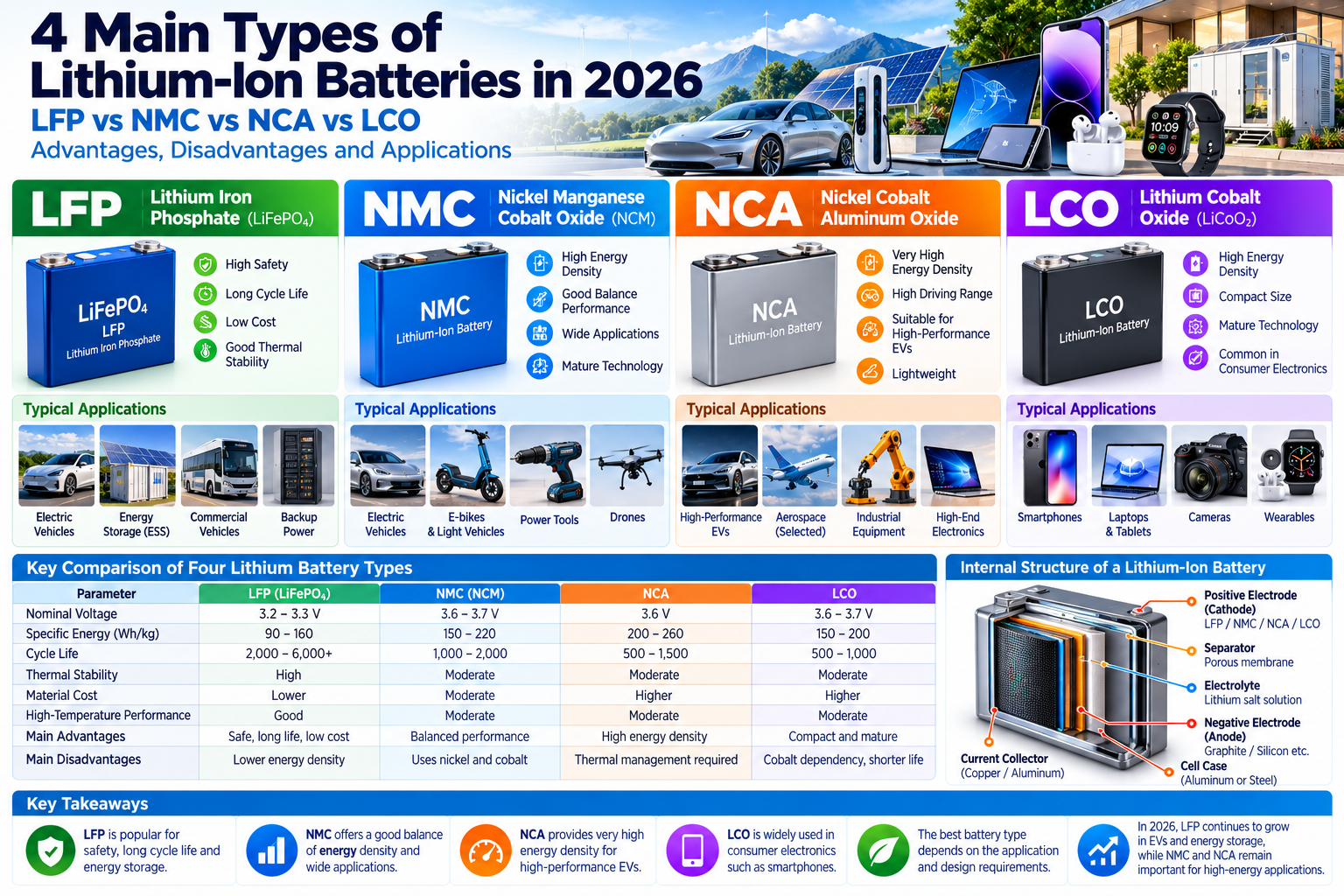
Lithium batteries are widely used because they can offer high energy density, low weight, and long storage life. The term lithium battery covers several different chemistries, including primary lithium batteries and rechargeable lithium-ion batteries.
Primary lithium batteries cannot normally be recharged. They are often used in products that need a compact power source with a long service life.
Common examples include CR2032 coin cells, lithium AA batteries, and other specialized cells used in sensors, medical equipment, security devices, and electronic instruments.
One important advantage of many primary lithium batteries is their low self-discharge rate. This makes them suitable for equipment that must remain ready for use over long periods.
2.3 Lithium-Ion Batteries
Lithium-ion batteries are rechargeable batteries found in smartphones, laptops, tablets, cameras, power tools, electric vehicles, and many other modern products.
They are popular because they combine relatively high energy density with good rechargeability. Compared with many older rechargeable battery technologies, lithium-ion batteries can store more energy for a given size and weight.
However, lithium-ion batteries require suitable charging and protection circuits. Overcharging, excessive heat, physical damage, or incorrect charging methods can create serious safety risks.
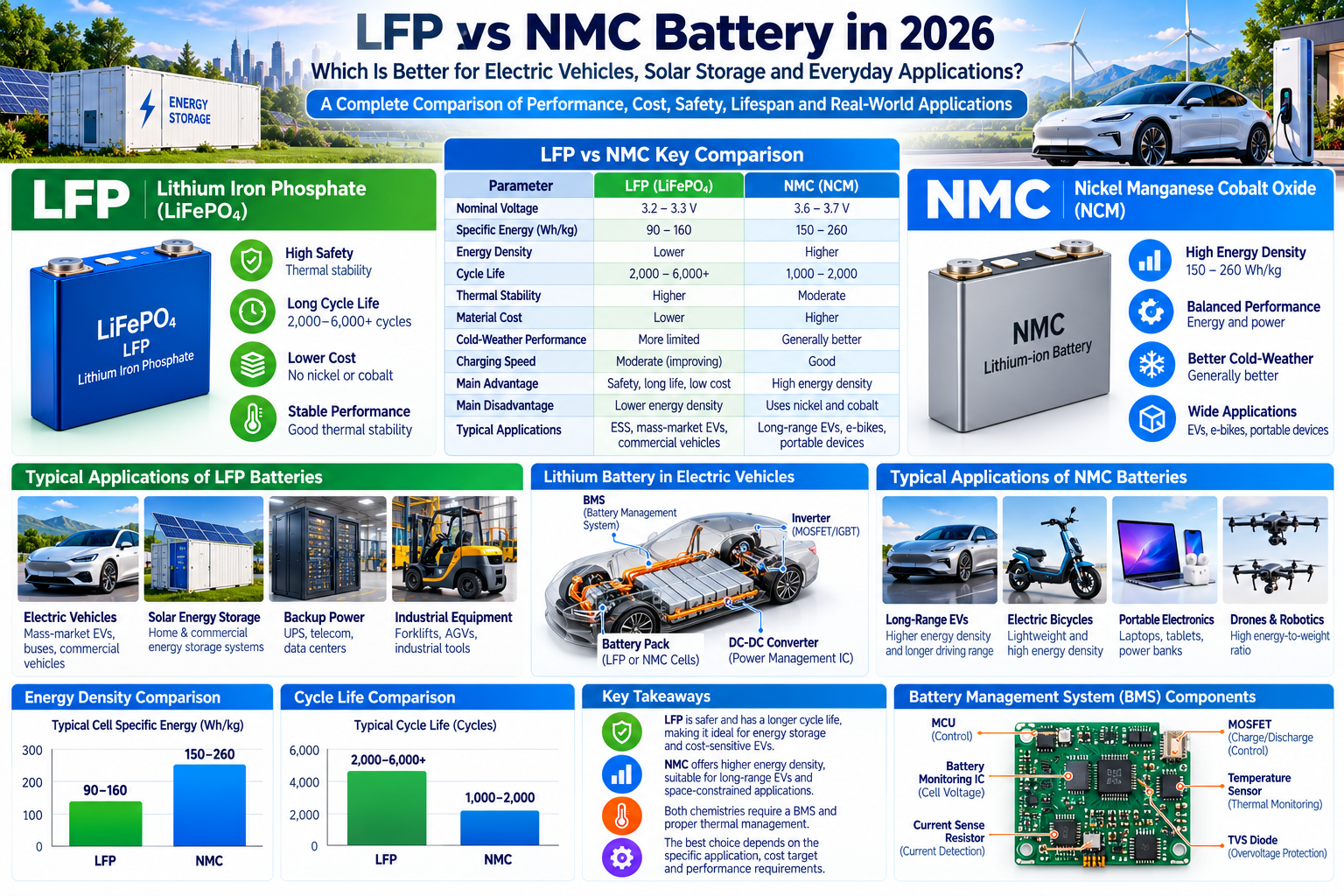
Different lithium-ion chemistries also have different characteristics. For example, lithium iron phosphate (LiFePO4) batteries are known for their thermal stability and long cycle life in suitable applications, while other lithium-ion chemistries may offer higher energy density.
The best chemistry depends on the product's energy requirements, operating temperature, weight limits, safety requirements, and expected service life.
2.4 Nickel-Metal Hydride Batteries
Nickel-metal hydride (NiMH) batteries are rechargeable batteries commonly used in AA and AAA formats. They are often found in cameras, toys, wireless devices, and household equipment.
NiMH batteries can be a useful alternative to disposable alkaline batteries in devices that consume energy frequently. They can be recharged and reused, reducing the need to purchase new disposable cells.
However, their voltage characteristics and charging requirements are different from lithium-ion batteries. A charger designed for one chemistry should not automatically be used with another.
2.5 Lead-Acid Batteries
Lead-acid batteries have been used for many years in automotive and backup power applications. They are commonly found in traditional vehicles, emergency lighting systems, and uninterruptible power supplies.
A car battery is a common example. It provides a high current for starting the engine and supports electrical systems when needed.
Lead-acid batteries are generally heavier than lithium-ion batteries, but they remain widely used because of their established technology, relatively low cost, and availability.
2.6 Button Cell Batteries
Button cell batteries are small, round batteries designed for compact electronic products. They are used in watches, calculators, remote controls, medical devices, key fobs, and small sensors.
Two common examples are the CR2032 battery and the LR44 battery. Although both are small, they use different chemical systems and have different electrical characteristics.
When replacing a button cell, users should check the exact battery code, voltage, dimensions, chemistry, and polarity. A battery that looks similar may not be a suitable replacement.
3. Lithium-Ion Battery: Why Is It So Popular?
The lithium-ion battery has become one of the most important energy storage technologies in the world. Its development has changed the way people use portable electronics and has helped support the growth of electric vehicles and renewable energy storage.
One major reason for its popularity is energy density. A lithium-ion battery can store a relatively large amount of energy in a small and lightweight package.
This is especially important for smartphones and laptops. Consumers want devices that are thin, light, and powerful while still providing long operating time.
Another advantage is rechargeability. A properly designed lithium-ion battery can complete many charge and discharge cycles before its usable capacity becomes too low for the intended application.
However, lithium-ion technology is not perfect. Battery aging is unavoidable, and performance can be affected by high temperatures, deep discharge, high charging rates, and long periods at very high states of charge.
For this reason, modern lithium-ion products often include a battery management system (BMS). A BMS monitors important battery conditions and can provide protection against overvoltage, undervoltage, overcurrent, and excessive temperature.
What Is a Lithium-Ion Battery Pack?
A lithium-ion battery pack is made by connecting multiple individual cells together. Depending on the design, cells may be connected in series, parallel, or a combination of both.
Series connections increase the total voltage, while parallel connections increase the available capacity and current capability under suitable conditions.
A battery pack may also include temperature sensors, protection circuits, a battery management system, connectors, and a protective housing.
Battery packs are used in laptops, electric bicycles, power tools, electric vehicles, portable medical devices, and energy storage systems.
When selecting a battery pack, important factors include:
- Nominal voltage and operating voltage range.
- Capacity in ampere-hours (Ah).
- Total energy in watt-hours (Wh).
- Maximum continuous discharge current.
- Peak discharge current.
- Charging current and charging voltage.
- Cell chemistry and configuration.
- Battery management and protection functions.
- Operating temperature range.
- Physical size, weight, and connector type.
A battery pack should always be matched to the equipment it powers. Voltage, current limits, chemistry, charging requirements, and protection features must all be considered.
4. Battery Charging: How to Charge a Battery Correctly
Battery charging is the process of restoring stored energy in a rechargeable battery. However, different battery chemistries require different charging methods.
For example, lithium-ion batteries commonly use a constant-current and constant-voltage charging process. NiMH batteries use different charging control methods, while lead-acid batteries require charging profiles suitable for their chemistry.
Using the wrong charger can reduce battery life and may create safety problems.
Choosing the Right Battery Charger
A suitable battery charger should match the battery chemistry, nominal voltage, charging current, and charging requirements specified by the battery manufacturer.
When choosing a charger, consider the following:
- Confirm the battery chemistry before charging.
- Check the required charging voltage.
- Use a charging current within the battery manufacturer's limits.
- Check connector polarity and physical compatibility.
- Use a charger with appropriate safety and temperature protections.
- Avoid damaged, swollen, leaking, or unusually hot batteries.
A charger that physically fits the battery is not necessarily electrically compatible. This is especially important when dealing with lithium-ion battery packs.
Does Fast Charging Reduce Battery Life?
Fast charging can save time, but higher charging current may increase heat and place additional stress on battery cells.
Modern charging systems are designed to control current and voltage according to battery conditions. Even so, repeated exposure to high temperatures can accelerate battery aging.
For everyday use, a charger recommended by the device manufacturer is generally the safest choice. There is no need to use the highest possible charging speed if the device does not require it.
Can You Leave a Rechargeable Battery Charging Overnight?
Many modern electronic products include charging management systems that stop or reduce charging when the battery reaches its target level.
However, this does not mean every charger and battery combination is safe. Damaged batteries, poor-quality chargers, blocked ventilation, and high temperatures can still create risks.
Use approved charging equipment and follow the product manufacturer's instructions. Avoid charging devices on soft surfaces that may trap heat.
5. Battery Life: How Long Should a Battery Last?
Battery life is one of the most common concerns among consumers. However, there is no single answer because battery service life depends on battery chemistry, operating conditions, usage patterns, temperature, and maintenance.
For rechargeable batteries, battery life can refer to either operating time per charge or the total period before the battery needs replacement. These are two different measurements.
Factors That Affect Battery Life
1. Temperature
High temperatures can accelerate chemical aging in many battery types. Heat is one of the most important factors affecting lithium-ion battery performance and long-term capacity.
2. Charging Habits
Charging behavior can affect battery aging. Repeatedly exposing a battery to very high temperatures or keeping it at a high state of charge for long periods may increase degradation.
3. Discharge Depth
How much energy is removed from a battery during each cycle can influence its cycle life. Some battery chemistries can achieve longer service life when they are not repeatedly discharged to their limits.
4. Battery Quality
Cell quality, manufacturing consistency, protection circuits, and product design all affect battery performance. A low-cost battery is not always the most economical option if it has poor reliability or a short service life.
5. Storage Conditions
Leaving batteries unused for long periods can still result in capacity loss. The correct storage charge level and temperature depend on the battery chemistry and manufacturer's recommendations.
How to Extend Battery Life
- Keep electronic devices away from excessive heat.
- Use a compatible charger.
- Avoid repeated deep discharge when the battery manufacturer recommends against it.
- Do not use damaged or swollen batteries.
- Store unused batteries under suitable conditions.
- Follow the manufacturer's charging and maintenance instructions.
- Replace batteries when their performance becomes unsuitable for the application.
Good battery habits cannot stop natural aging, but they can help reduce unnecessary stress and improve the useful service life of many rechargeable batteries.
6. Car Battery: How It Works and When to Replace It
A car battery is an essential part of a vehicle's electrical system. In traditional gasoline vehicles, the battery supplies the high current needed to start the engine. It also supports electronic systems when the engine is not running and helps stabilize the vehicle's electrical supply.
Most traditional vehicles use lead-acid batteries, including flooded, enhanced flooded, and absorbed glass mat (AGM) designs. Some modern vehicles use different battery technologies depending on their electrical architecture.
Signs That a Car Battery Needs Replacement
- The engine starts slowly or takes longer than normal to turn over.
- Dashboard lights become weak during startup.
- Electrical accessories behave unusually.
- The battery repeatedly loses charge.
- The battery case is damaged, swollen, or leaking.
- A battery test shows poor starting performance or low available capacity.
- The vehicle has difficulty starting after being parked for a short period.
These symptoms do not always mean the battery itself is defective. Problems with the alternator, starter motor, wiring, electrical connections, or parasitic current consumption can produce similar symptoms.
How to Test a Car Battery
A digital multimeter can provide a basic measurement of battery voltage. For a conventional 12V lead-acid battery, a fully charged battery often measures around 12.6V to 12.8V after resting, although the exact value depends on battery design, temperature, and measurement conditions.
A voltage measurement alone cannot fully determine battery health. A battery may show a normal resting voltage but still have insufficient starting power.
For a more complete assessment, use an appropriate battery tester that can evaluate state of charge and starting performance. A professional load test or conductance test can help identify a weak battery.
The vehicle's charging system should also be checked if the battery repeatedly becomes discharged.
How to Change a Car Battery
Car battery replacement requires care because vehicle electrical systems can be sensitive to incorrect connections and power interruptions.
A general replacement process includes:
- Park the vehicle safely, switch off the ignition, and follow the vehicle manufacturer's battery replacement instructions.
- Wear suitable eye protection and gloves.
- Identify the battery terminals and confirm their polarity.
- Disconnect the negative terminal first, followed by the positive terminal.
- Remove the battery hold-down hardware and carefully take out the old battery.
- Check the battery tray and terminals for corrosion or damage.
- Install a compatible replacement battery with the correct dimensions, capacity, terminal arrangement, and technology.
- Secure the battery and reconnect the positive terminal first, followed by the negative terminal.
- Confirm that the connections are secure and check the vehicle's electrical systems.
Some modern vehicles require battery registration, battery management system resetting, or special procedures to preserve electronic settings. Always follow the vehicle service manual. If you are unsure, use a qualified technician.
Car Battery Replacement Cost
The car battery replacement cost depends on several factors, including vehicle type, battery chemistry, battery size, brand, installation labor, and local service prices.
A standard flooded lead-acid battery is often less expensive than an AGM battery. Vehicles with start-stop systems or advanced battery management may require a specific battery type.
When comparing replacement prices, do not focus only on the purchase cost. Consider warranty coverage, starting performance, expected service life, and installation requirements.
Drivers should also check whether the vehicle requires a battery with a specific group size, cold cranking amps (CCA), reserve capacity, or AGM technology.
What About Interstate Battery?
Interstate Batteries is a well-known battery brand that offers products for automotive, commercial, marine, and other applications.
When selecting an Interstate battery or another automotive battery brand, the most important step is to confirm that the model matches the vehicle manufacturer's requirements.
A well-known brand name does not automatically mean that every battery in its product range is suitable for every vehicle.
7. CR2032 Battery vs. LR44 Battery: What Is the Difference?
Button cell batteries are used in many small electronic products. Two frequently searched models are CR2032 and LR44. Although they may look similar at first glance, they are not interchangeable.
CR2032 Battery
The CR2032 is a 3V lithium manganese dioxide coin cell. It has a nominal diameter of approximately 20mm and a thickness of approximately 3.2mm.
Common applications include:
- Computer motherboard backup circuits.
- Car remote controls and key fobs.
- Digital scales.
- Small wireless sensors.
- Electronic measuring devices.
- Watches and other compact electronic products designed for CR2032 cells.
The CR2032 is popular because it offers a compact 3V power source and can provide long service life in suitable low-power applications.
LR44 Battery
The LR44 is a 1.5V alkaline button cell. It measures approximately 11.6mm in diameter and 5.4mm in height.
It is commonly used in:
- Small electronic toys.
- Calculators.
- Small flashlights.
- Digital thermometers designed for LR44 cells.
- Compact measuring instruments.
- Other low-power electronic devices.
Some compatible-looking button cells use silver oxide chemistry and have different model codes, such as SR44. Their electrical characteristics and discharge behavior may differ from standard LR44 alkaline cells.
CR2032 vs. LR44 Comparison
| Parameter | CR2032 | LR44 |
|---|---|---|
| Battery Chemistry | Lithium Manganese Dioxide | Alkaline |
| Nominal Voltage | 3V | 1.5V |
| Diameter | 20mm | 11.6mm |
| Thickness | 3.2mm | 5.4mm |
| Rechargeable | No | No |
| Common Uses | Key fobs, sensors, motherboard backup | Calculators, toys, small devices |
The most important rule is to replace a button cell with the exact model recommended by the device manufacturer. Never assume that two button cells can be substituted simply because their physical dimensions are similar.
8. iPhone Battery and Samsung Battery Replacement
Smartphone batteries are usually rechargeable lithium-ion or lithium-polymer battery systems. They are designed to provide enough energy for the display, processor, cameras, wireless connections, and other electronic functions.
Over time, smartphone battery capacity naturally decreases. This process is caused by chemical aging and is influenced by temperature, charging habits, usage patterns, and the number of charge cycles.
When Should You Replace an iPhone Battery?
Common signs of an aging iPhone battery include shorter operating time, unexpected shutdowns, reduced peak performance, and battery health warnings.
Apple provides battery health information in supported iPhone models. Users can check the battery condition in the device settings and review whether service is recommended.
Battery replacement can restore much of the original operating time when the battery has significantly degraded. However, users should also consider other causes of high power consumption, such as background applications, poor network conditions, and software problems.
When Should You Replace a Samsung Battery?
Samsung smartphones also use rechargeable lithium-based battery systems. A battery may need replacement when it drains unusually fast, becomes unstable, or shows signs of physical damage.
Some Samsung devices provide battery diagnostic information through Samsung Members or built-in device care functions, depending on the model and software version.
Battery replacement should use a compatible part with the correct model specification. A battery with the wrong connector, dimensions, or protection design may damage the device or create safety problems.
Original Battery vs. Third-Party Replacement Battery
Original manufacturer batteries are generally designed and validated for the specific device. Third-party replacement batteries may offer a lower purchase price, but quality can vary significantly between suppliers.
Before buying a replacement, check the battery model, rated capacity, safety certifications, seller reputation, warranty, and return policy.
For products with integrated battery protection and software monitoring, compatibility is especially important. A battery should not be selected based only on its advertised capacity.
9. How to Choose the Best Battery for Your Device
The best battery is not necessarily the most expensive or the one with the highest advertised capacity. It is the battery that matches the electrical, mechanical, and operating requirements of the application.
Before purchasing a battery, consider these key points.
Check Voltage First
Voltage is one of the most important battery specifications. A battery with an incorrect voltage may prevent a device from operating or may damage sensitive electronic components.
Compare Capacity and Energy
Battery capacity is commonly measured in mAh or Ah. Energy is measured in Wh. When comparing batteries with different nominal voltages, watt-hours provide a more useful way to compare stored energy.
Consider Discharge Current
Some devices need only a small current, while motors, power tools, and automotive systems may require much higher current. A battery must be able to supply the required current without exceeding its limits.
Check Battery Size
Physical compatibility matters. Even a battery with the correct voltage may not fit the battery compartment or connector arrangement.
Choose a Reliable Supplier
Battery sourcing is especially important for manufacturers and electronic component buyers. A reliable supplier should provide accurate model information, traceability, proper storage conditions, and clear product documentation.
For commercial purchasing, it is useful to compare not only unit price but also minimum order quantity, production lead time, warranty, and long-term availability.
10. Why Battery Quality Matters in Electronic Products
A battery is not just a power source. It can directly affect the performance, reliability, and safety of the complete electronic product.
For example, a battery with excessive internal resistance may experience a larger voltage drop when a device draws current. This can cause unexpected shutdowns or poor performance.
In a lithium-ion battery pack, differences in cell quality can also affect capacity balance, charging behavior, temperature, and long-term reliability.
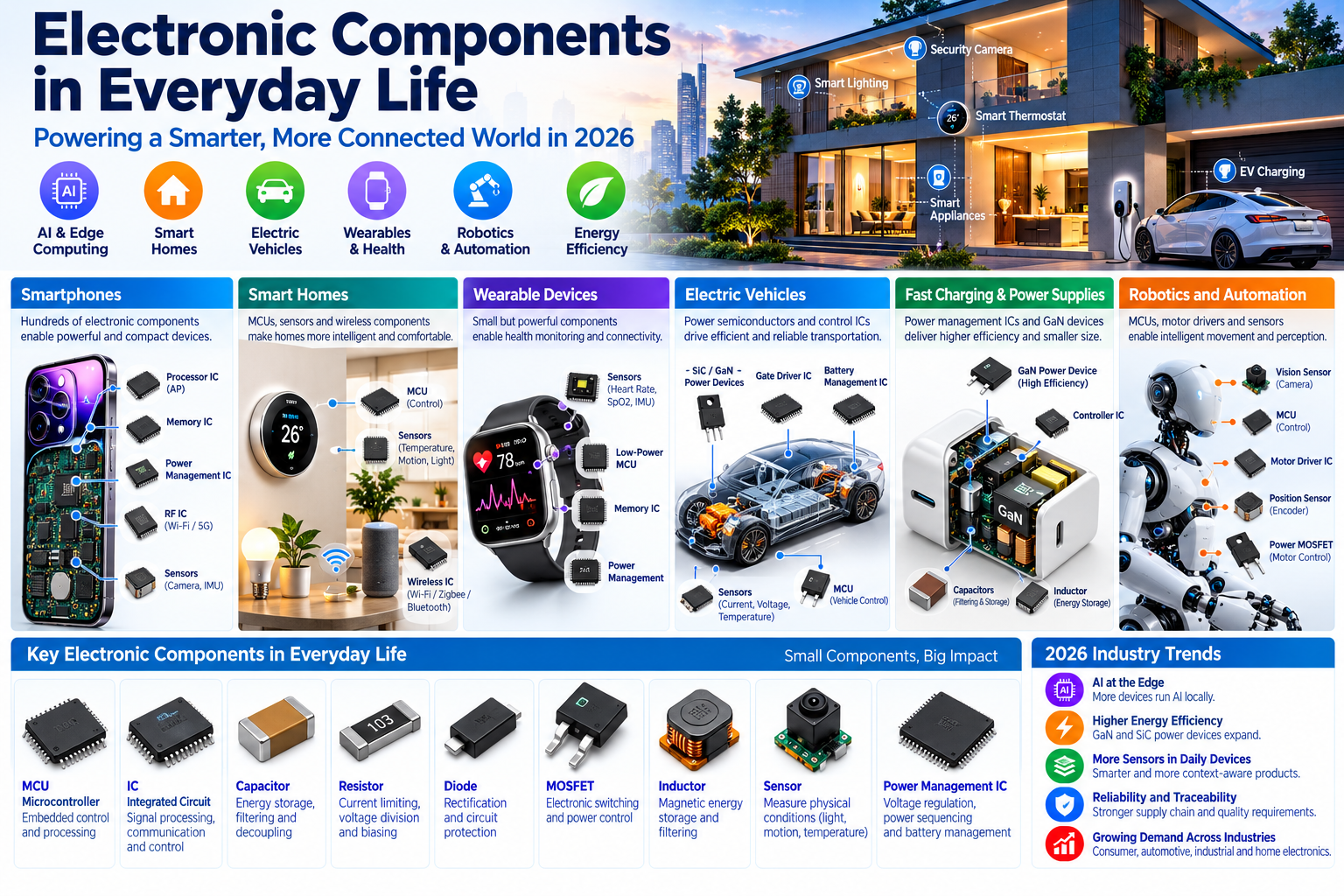
For manufacturers, selecting battery cells and protection components requires careful evaluation. A complete battery system may include:
- Battery cells.
- Battery management ICs.
- Protection MOSFETs.
- Current sensing resistors.
- Temperature sensors.
- Charging control ICs.
- Voltage monitoring circuits.
- Connectors and protective housings.
These components work together to manage charging, discharging, monitoring, and protection. A high-quality battery cell alone does not guarantee a safe and reliable battery pack.
For electronic component buyers, understanding the complete power system can help avoid selecting components that do not meet the application's actual requirements.
11. Battery Replacement vs. Buying a New Device
When a battery becomes weak, consumers often face a choice: replace the battery or purchase a new device.
The correct decision depends on the product's overall condition, replacement cost, expected remaining service life, and repair availability.
For a smartphone with a good display, working cameras, and a fast processor, replacing the battery may be much more economical than purchasing a new phone.
For an older laptop with several hardware problems, however, battery replacement may not provide enough value.
The same principle applies to automotive batteries. If the vehicle is in good condition and the charging system works correctly, replacing a weak battery is often more practical than making other major changes.
Before making a decision, compare:
- Replacement battery price.
- Labor and installation cost.
- Current condition of the device.
- Expected battery service life.
- Warranty and repair support.
- Availability of compatible replacement parts.
Battery replacement can also reduce electronic waste by extending the useful life of existing products. However, repairs should be performed safely and with compatible parts.
12. Battery Recycling and Environmental Protection
Used batteries should not be treated as ordinary household waste. Many battery types contain materials that require proper collection and recycling.
Lithium-ion batteries are particularly important to handle correctly because damaged or improperly disposed cells can create fire risks.
Lead-acid batteries also require proper recycling because they contain lead and corrosive electrolyte.
Consumers should use approved battery collection programs, recycling centers, or retailer take-back services. Local disposal rules may differ by country, state, and city.
Before recycling a battery, protect its terminals where required by local collection guidelines. Do not crush, puncture, dismantle, or burn used batteries.
For damaged, swollen, leaking, or hot lithium batteries, avoid normal handling and follow local hazardous waste or emergency guidance.
Battery recycling helps recover useful materials, reduces environmental impact, and supports a more sustainable electronics industry.
13. Future Battery Technology: What Comes Next?
Battery technology continues to develop as demand increases for electric vehicles, portable electronics, renewable energy storage, and industrial power systems.
Several technology areas are attracting attention.
Solid-State Batteries
Solid-state batteries use a solid electrolyte instead of the liquid electrolyte found in many conventional lithium-ion designs. Researchers are studying them for potential improvements in energy density, safety, and charging performance.
However, manufacturing cost, material stability, production scale, and long-term reliability remain important challenges.
Lithium Iron Phosphate Batteries
Lithium iron phosphate (LFP) batteries are becoming important in energy storage and electric vehicle applications. They are known for good thermal stability, long cycle life, and the use of iron and phosphate-based cathode materials.
Although their energy density may be lower than some other lithium-ion chemistries, they can offer attractive performance for applications where safety, cost, and durability are important.
Better Battery Management Systems
Battery management technology is also improving. Modern BMS designs can monitor cell voltage, current, temperature, and other operating conditions.
More advanced monitoring can help improve battery protection, performance, and service life. It is especially important in large battery packs used in electric vehicles and energy storage systems.
Recycling and Battery Material Recovery
As battery production increases, recycling will become more important. Recovering useful materials from used batteries can reduce demand for newly mined resources and support a more sustainable supply chain.
The future battery market will not depend on a single technology. Different battery chemistries will continue to serve different needs, from small electronic devices to electric vehicles and large energy storage installations.
14. Frequently Asked Questions About Batteries
Q1. What Is the Most Common Type of Battery?
Common battery types include alkaline, lithium primary, lithium-ion, NiMH, and lead-acid batteries. Lithium-ion batteries are widely used in smartphones, laptops, and electric vehicles, while alkaline batteries remain common in household devices.
Q2. What Is the Difference Between a Lithium Battery and a Lithium-Ion Battery?
Lithium battery is a broad term that includes several chemistries. Many primary lithium batteries are designed for single use, while lithium-ion batteries are rechargeable and commonly used in portable electronics and electric vehicles.
Q3. How Do I Know When My Battery Needs Replacement?
Common warning signs include shorter operating time, slow engine starting, unexpected shutdowns, reduced charging performance, physical swelling, and poor results from a suitable battery test.
Q4. How Much Does Car Battery Replacement Cost?
Car battery replacement cost depends on the vehicle, battery type, capacity, brand, labor, and location. AGM batteries and batteries for vehicles with special electrical requirements may cost more than standard lead-acid models.
Q5. Can a CR2032 Battery Replace an LR44 Battery?
No. A CR2032 is a 3V lithium coin cell, while an LR44 is a 1.5V alkaline button cell. They have different voltages and physical dimensions and are not direct replacements for each other.
Q6. How Can I Test a Car Battery at Home?
A digital multimeter can measure resting battery voltage. However, a voltage reading alone cannot fully determine battery health. A suitable battery tester or professional load test provides more useful information about starting performance.
Q7. Does Fast Charging Damage a Battery?
Fast charging does not automatically damage a battery when the device and charger are designed for it. However, repeated high-temperature operation and charging outside the manufacturer's recommended limits can accelerate battery aging.
Q8. What Is the Best Battery for Long-Term Use?
There is no single best battery for every application. Lithium-ion batteries are suitable for many rechargeable portable products, LFP batteries are useful in many stationary and vehicle applications, and primary lithium cells can offer long storage life in low-power devices.
Q9. Can I Recharge an Alkaline Battery?
Standard alkaline batteries are designed for single use and should not be placed in ordinary rechargeable battery chargers. Use rechargeable battery types such as NiMH or compatible lithium-ion products when repeated charging is required.
Q10. Where Should I Buy a Replacement Battery?
Buy replacement batteries from reliable retailers, authorized distributors, or suppliers with clear product specifications and traceability. Always verify the exact battery model and compatibility before purchasing.
15. Final Thoughts: Choosing the Right Battery Is About More Than Price
Battery technology is an important part of modern life. From a small CR2032 battery inside a remote control to a large lithium-ion battery pack in an electric vehicle, every battery is designed to meet a specific set of electrical and operating requirements.
The most important factors when selecting a battery are voltage, capacity, chemistry, discharge current, physical size, charging requirements, and expected service life.
For consumers, understanding these basic specifications can help reduce unnecessary replacement costs and improve device reliability. For manufacturers and electronic component buyers, battery quality and compatibility are essential parts of product design and supply chain management.
As lithium-ion technology, LFP batteries, solid-state research, and battery management systems continue to develop, the battery industry will remain an important part of electronics, transportation, and energy storage.
The best battery is not simply the one with the highest capacity or the lowest price. It is the one that provides the right balance of performance, safety, reliability, and cost for the intended application.