

Digital Signal: What It Is, How It Works, and Common Applications
Contents
ELECTRONICS GUIDE
Digital Signal: What It Is, How It Works, and Common Applications
A digital signal is a signal that represents information using discrete values or defined states. Digital signals are widely used in computers, microcontrollers, communication systems, consumer electronics, industrial equipment, and modern embedded systems. This guide explains the digital signal definition, how digital signals work, common examples, waveforms, processing, noise, applications, and the difference between digital and analog signals.
What Is a Digital Signal?
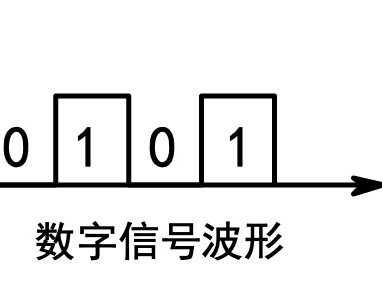
A digital signal is a signal used to represent information through discrete values rather than continuously changing values. In many electronic systems, these values are represented by two main logic states, commonly called 0 and 1.
This simple idea is the foundation of modern digital electronics. Computers, microcontrollers, memory devices, digital communication equipment, and many other electronic products depend on digital signals to move and process information.
For example, a digital circuit may use a low voltage level to represent logic 0 and a higher voltage level to represent logic 1. The exact voltage levels depend on the technology and circuit design.
It is important to understand that a digital signal does not necessarily mean that the physical voltage itself can only have two possible values. The actual electrical waveform can move between voltage levels. What makes the signal digital is how the receiving circuit interprets those levels as discrete states.
Digital Signal Definition
A simple digital signal definition is a signal that carries information using discrete states, values, or symbols.
In basic digital electronics, the two most common states are:
- Logic 0
- Logic 1
These states allow electronic circuits to represent binary information. By combining many binary states, a system can represent numbers, text, images, audio data, instructions, and other types of information.
For example, a group of eight binary bits can represent 256 different numerical combinations. Modern processors use much larger groups of bits to perform complex calculations and handle large amounts of information.
Therefore, the real value of a digital signal is not simply that it uses 0 and 1. Its importance comes from the ability to represent, process, store, copy, and transmit information using well-defined states.
How Does a Digital Signal Work?
Understanding how a digital signal works becomes easier when looking at a simple electronic system.
A digital device generates or receives information and represents that information using defined electrical states. Digital circuits then detect these states and perform logical operations based on them.
A simple process can be represented as:
For example, when a microcontroller reads the state of a digital input, it determines whether the input meets the conditions for a logic low or logic high.
The processor can then use that information to make decisions, control outputs, communicate with another device, or perform calculations.
This simple process happens extremely quickly in modern electronic systems.
Digital Signal Examples
Digital signals are found in many products and systems. Some examples are easier to understand than others.
Computer Data
Computers process information in digital form. Data such as text, numbers, images, and software instructions are represented using binary information.
Microcontroller Signals
Microcontrollers use digital signals to communicate with sensors, displays, memory devices, drivers, and other electronic components.
Digital Communication
Digital communication systems use digital information to transfer data between devices. Ethernet, USB, and many wireless technologies are examples of systems that process digital information.
Digital Control Signals
A control circuit may use a digital signal to turn a device on or off, enable a circuit, select a mode, or control another component.
Clock Signals
Digital systems often use clock signals to synchronize operations. A clock signal usually changes between defined high and low states at a specific frequency.
Digital Signal Types
There are different ways to classify digital signals depending on how they are generated and used.
Binary Signals
Binary signals use two logical states. This is the basic form used by many digital circuits.
Clock Signals
Clock signals provide timing information to digital circuits. They help processors and other synchronous systems coordinate operations.
Data Signals
Data signals carry information between digital devices or different parts of an electronic system.
Control Signals
Control signals tell circuits what operation to perform or when a particular operation should occur.
The exact electrical characteristics of a digital signal depend on the interface standard, voltage family, speed, load, and circuit design.
Digital Signal Waveform
A typical digital signal waveform often looks like a series of high and low levels. This is why digital signals are sometimes associated with square waves.
However, a real digital signal is not a perfect square wave.
When a digital output changes state, the voltage needs a finite amount of time to move from one level to another. The actual waveform can therefore have:
- Rise time
- Fall time
- Propagation delay
- Overshoot
- Undershoot
- Ringing
At low speeds, these effects may not be very important. At higher data rates, however, signal integrity becomes increasingly important.
This is one reason engineers must consider PCB layout, trace length, impedance, termination, power integrity, and electromagnetic interference when designing high-speed digital systems.
Digital Signal vs Analog Signal
The digital signal vs analog signal comparison is one of the most common topics in electronics.
The basic difference is that an analog signal represents information through continuous variation, while a digital signal represents information through discrete states or values.
| Feature | Digital Signal | Analog Signal |
|---|---|---|
| Information representation | Discrete states or digital values | Continuous variation |
| Common logic states | 0 and 1 | Continuous signal level |
| Typical systems | Computers, MCUs, digital interfaces | Sensors, audio, analog circuits |
| Noise handling | Can often tolerate a range of signal variation | Noise directly changes the signal value |
| Data processing | Highly suitable for digital processing | Requires analog processing or conversion |
Neither technology is automatically better in every situation. Modern electronic systems frequently combine both. Analog circuits interact with the physical world, while digital circuits provide powerful processing and control.
Advantages of Digital Signals
Digital signal technology became widely used because it offers several important advantages for modern electronics.
1. Reliable Data Processing
Digital circuits can process information using clearly defined logic states. This makes them highly suitable for mathematical operations, decision making, data storage, and software control.
2. Easy Data Storage
Digital information can be stored in memory devices and reproduced without requiring the original physical waveform to remain unchanged.
3. Efficient Data Copying
Digital data can generally be copied many times without the same type of gradual signal degradation associated with traditional analog copying.
4. Strong Compatibility with Computers
Computers and processors operate naturally on digital data. Digital signals therefore provide an efficient way for electronic hardware and software to work together.
5. Flexible Processing
Once information has been converted into digital form, software can modify, analyze, compress, store, or transmit it using different methods.
6. Easy Integration
Digital circuits can be integrated into microcontrollers, processors, memory devices, communication chips, and system-on-chip solutions.
Disadvantages of Digital Signals
Digital signals also have limitations. Understanding these limitations is important when selecting a system architecture.
Requires Conversion for Many Real-World Signals
Temperature, sound, pressure, and light are physical quantities that are naturally continuous. A digital system may therefore require sensors and ADCs to convert these signals into digital information.
Higher System Complexity in Some Applications
A digital system may require processors, memory, clocks, interfaces, software, and conversion circuits. For a simple task, an analog circuit can sometimes provide a more direct solution.
High-Speed Design Can Be Challenging
As digital signal speed increases, engineers must pay greater attention to signal integrity, electromagnetic interference, power integrity, timing, and PCB layout.
Power and Processing Requirements
Complex digital processing can require significant processing resources and power, especially in high-performance systems.
Digital Signal Processing
Digital signal processing, often called DSP, refers to the processing of digital data using mathematical operations and digital hardware or software.
Digital signal processing can be used for:
- Filtering
- Noise reduction
- Audio processing
- Image processing
- Data analysis
- Signal detection
- Communication processing
- Control systems
One major advantage of digital processing is flexibility. The same processor can perform different signal-processing tasks by changing its software or firmware.
This flexibility has made digital signal processing important in modern communication, audio, industrial, automotive, medical, and consumer electronic systems.
Digital Signal and Noise
Digital signals are not completely immune to noise.
Noise can still affect a digital signal during transmission or processing. The important difference is that a digital receiver usually interprets a range of voltage values as a logical state.
For example, if a receiver expects a logic-high signal above a certain threshold, a small amount of noise may not change the interpreted digital state.
This gives digital systems an important practical advantage.
However, if noise becomes large enough, the receiver may interpret the signal incorrectly. At high speeds, even relatively small signal integrity problems can cause timing errors or data corruption.
Therefore, digital system designers still need to consider:
- Noise margin
- Signal integrity
- Grounding
- Power supply quality
- PCB layout
- Electromagnetic interference
- Transmission distance
Digital Signal Transmission
Digital signal transmission allows information to move between electronic devices.
A digital system may transmit information through copper traces, cables, optical links, or wireless connections.
Examples of digital interfaces include:
- USB
- Ethernet
- SPI
- I2C
- UART
- CAN
- Digital wireless interfaces
Different interfaces use different electrical and communication methods, but they all rely on digital information being represented and interpreted correctly.
As transmission speed increases, the design becomes more sensitive to timing, impedance, capacitance, inductance, crosstalk, and other physical effects.
Digital Signal Applications
The number of digital signal applications continues to grow because digital electronics are used in almost every major technology sector.
Computers
Computers rely heavily on digital signals to process instructions, move data, communicate with memory, and control hardware.
Microcontrollers
Microcontrollers use digital signals for GPIO control, communication interfaces, timers, counters, and interaction with other electronic components.
Consumer Electronics
Smartphones, televisions, cameras, gaming systems, smart appliances, and many other consumer products depend on digital signal technology.
Industrial Automation
Industrial control systems use digital signals to monitor equipment, control actuators, communicate with sensors, and coordinate machine operations.
Automotive Electronics
Modern vehicles contain many digital control systems for powertrain management, driver assistance, infotainment, communication, and body electronics.
Communication Equipment
Digital signal processing and digital communication are important in networking equipment, wireless systems, optical communication, and data infrastructure.
Medical Electronics
Medical devices use digital systems for measurement, data analysis, display, storage, communication, and control.
Digital Signal in Electronics
A digital signal in electronics is not simply a software concept. It has real electrical characteristics that must be considered during hardware design.
Engineers need to understand parameters such as:
- Logic voltage levels
- Rise time
- Fall time
- Propagation delay
- Frequency
- Duty cycle
- Noise margin
- Input and output current
- Load capacitance
These parameters affect whether a digital circuit can reliably communicate with another device.
At low frequencies, a digital signal can appear simple. At high frequencies, however, the signal must be treated as a real electrical waveform rather than an ideal sequence of zeros and ones.
Digital Signal System Design
A reliable digital signal system requires more than selecting a processor or communication chip.
Engineers may need to consider:
- Power supply stability
- Ground connections
- PCB trace length
- Signal routing
- Input and output loading
- Electromagnetic interference
- Timing requirements
- Interface compatibility
- Environmental conditions
Good digital design balances electrical performance, cost, power consumption, reliability, and system requirements.
For high-speed systems, PCB design becomes especially important because the physical characteristics of the board can directly influence digital signal quality.
Digital Signal and Analog Signal Work Together
It is tempting to think of digital and analog signals as competing technologies. In real electronic products, they are often used together.
A typical system may follow this path:
If the system needs to create an analog output, the process can continue in the opposite direction:
This architecture is common in audio systems, measurement equipment, industrial controllers, communication devices, automotive electronics, and many other products.
Therefore, understanding digital signals also requires understanding how they interact with analog circuits.
Why Digital Signal Technology Became So Important
Digital signal technology became extremely important because it provides a practical foundation for modern computing and communication.
Once information is represented digitally, it can be processed by software and hardware in highly flexible ways.
Digital information can be:
- Stored in memory
- Processed by a CPU or MCU
- Analyzed by algorithms
- Transmitted through communication networks
- Copied between systems
- Compressed and encoded
- Protected with error-detection methods
This flexibility has helped digital technology become the foundation of computers, smartphones, industrial controllers, networking equipment, and many intelligent electronic products.
The Future of Digital Signal Technology
Digital signal technology will remain important as electronic systems become faster, smarter, and more connected.
Areas such as artificial intelligence, industrial automation, robotics, electric vehicles, advanced communication networks, edge computing, and smart sensors all depend on digital processing.
At the same time, higher performance creates new challenges.
Faster digital signals require better:
- Signal integrity
- Power integrity
- Thermal management
- PCB design
- High-speed interfaces
- EMI control
The future is therefore not only about making digital systems faster. It is also about making them more reliable, power efficient, compact, and easier to integrate with analog and physical-world systems.
Digital Signal FAQ
What is a digital signal?
A digital signal is a signal that represents information using discrete states or digital values. In many basic electronic systems, these states are represented as logic 0 and logic 1.
What is a digital signal example?
Examples include computer data, microcontroller GPIO signals, clock signals, digital communication signals, and control signals used between electronic devices.
What is the difference between digital and analog signals?
A digital signal represents information using discrete states or values, while an analog signal represents information through continuous changes.
Is a digital signal always 0 or 1?
Digital information is commonly represented using binary states, but the actual electrical waveform can have different voltage levels and transitions. The receiving circuit determines whether the signal represents a logic low or logic high according to its electrical specifications.
Is a digital signal affected by noise?
Yes. Digital signals can be affected by electrical noise, interference, ringing, crosstalk, and other signal-integrity problems. However, digital systems can often tolerate a certain range of signal variation without changing the interpreted logic state.
What is digital signal processing?
Digital signal processing is the use of digital hardware or software to analyze and modify digital data. It is widely used for filtering, audio processing, communication, measurement, image processing, and control applications.
Where are digital signals used?
Digital signals are used in computers, microcontrollers, smartphones, industrial automation systems, automotive electronics, networking equipment, medical devices, communication systems, and many other electronic products.
Why are digital signals important?
Digital signals provide a reliable and flexible way to represent, process, store, and transmit information. They are a fundamental part of modern electronic and computing systems.
Conclusion
A digital signal is one of the fundamental technologies behind modern electronics. By representing information through discrete states or digital values, digital systems can process, store, transmit, and control information efficiently.
From computers and microcontrollers to industrial automation, automotive electronics, communication equipment, and consumer devices, digital signals are present in almost every major area of modern electronics.
Digital signals also provide important advantages in data processing, storage, communication, and system control. However, they are not completely isolated from the physical world. Noise, signal integrity, PCB design, timing, and electrical characteristics remain important factors in reliable digital systems.
More importantly, digital and analog technologies usually work together rather than existing as completely separate choices. Analog signals help electronic systems sense the physical world, while digital signals allow processors and software to analyze and control the resulting information.
As electronics continue to move toward higher speeds, greater connectivity, lower power consumption, and more intelligent processing, the importance of digital signal technology will continue to grow.