

If you have ever opened an electronic device, looked at a circuit board, or searched for terms such as microcontroller, MCU, or microprocessor, you may have wondered what these small chips actually do. A microcontroller is one of the most important building blocks in modern electronics, yet its job is often hidden behind the product's final function.
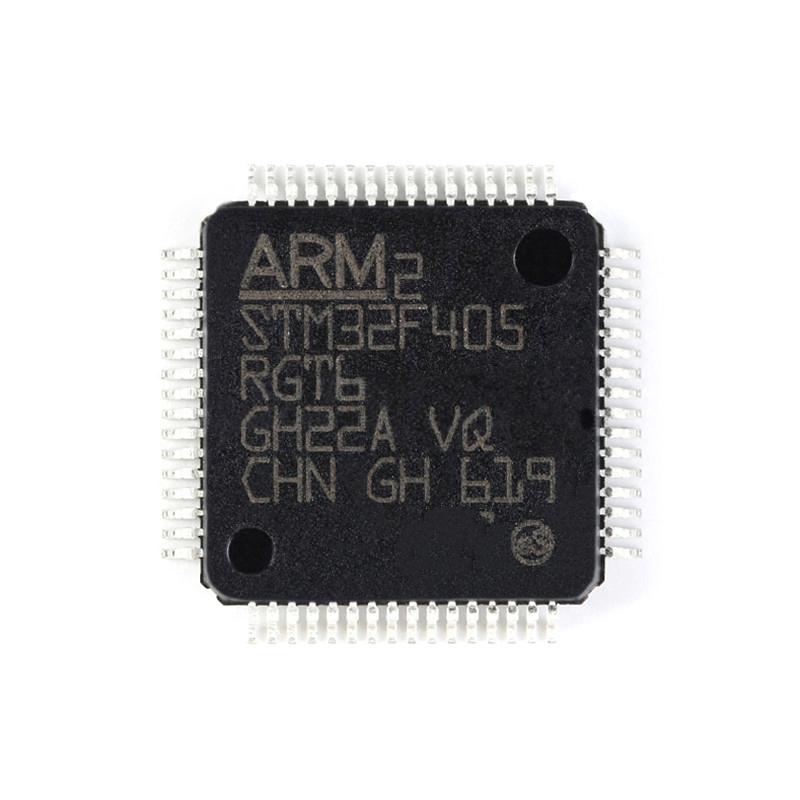
So, what is a microcontroller? In simple terms, a microcontroller is a small computer built into a single integrated circuit. It contains a processor, memory, and input/output functions that allow it to read information, make decisions, and control other electronic devices.
Unlike a general-purpose computer, a microcontroller is usually designed to perform a specific control task. It may monitor a temperature sensor, control a motor, read a button, manage a battery, operate a display, or communicate with another electronic device.
This article explains what is a microcontroller from the ground up. It covers MCU meaning, how a micro controller works, the difference between a microcontroller and a microprocessor, common applications, industrial uses, programming, and the factors engineers consider when selecting an MCU.
What Is a Microcontroller?
A microcontroller is a compact integrated circuit designed to control electronic systems. It usually combines a central processing unit, memory, timers, communication interfaces, and general-purpose input/output pins inside one chip.
Think of a microcontroller as a small dedicated computer. It does not usually need a large collection of external chips to perform basic control functions because many of the necessary resources are already built into the device.
For example, imagine a simple automatic fan. The microcontroller can read a temperature sensor, compare the measured temperature with a programmed value, and then turn the fan motor on or off. The entire decision process can happen inside the MCU.
This ability to sense, process, and control is the basic reason microcontrollers are used in so many products.
A typical microcontroller may contain:
- CPU core: Executes instructions from the program.
- Flash memory: Stores the program even when power is removed.
- RAM: Temporarily stores variables and working data.
- GPIO pins: Connect the MCU to buttons, LEDs, sensors, and other circuits.
- Timers and counters: Generate accurate timing and measure events.
- ADC: Converts analog sensor signals into digital values.
- PWM: Generates controlled pulse signals for motors, LEDs, and power circuits.
- Communication interfaces: Support protocols such as UART, SPI, I2C, CAN, USB, or other interfaces depending on the device.
The exact features depend on the MCU family. Some devices are extremely simple and inexpensive, while advanced microcontrollers can provide powerful processing, large memory, networking, security features, and specialized peripherals.
MCU Meaning: What Does MCU Stand For?
MCU meaning is straightforward: MCU stands for Microcontroller Unit.
The terms MCU and microcontroller normally refer to the same basic type of device. In electronics discussions, engineers often use MCU because it is shorter and easier to write in circuit diagrams, datasheets, specifications, and technical documents.
You may also see the term micro controller written as two words. In most technical contexts, "microcontroller" is the more common spelling, but both expressions are generally referring to the same concept.
When someone asks, "What is an MCU?", they are essentially asking what a microcontroller is and how it is used to control an electronic system.
How Does a Microcontroller Work?
A microcontroller works by repeatedly following instructions stored in its program memory. The basic process can be understood as input, processing, and output.
First, the MCU receives information from the outside world. This information may come from a button, sensor, communication interface, or another electronic circuit.
Second, the processor examines the information according to the programmed instructions.
Third, the MCU produces an output. The output may turn on an LED, drive a motor, change a display, activate a relay, send a communication message, or adjust another part of the system.
A simplified control cycle looks like this:
- Read an input.
- Store or process the information.
- Compare the information with programmed conditions.
- Make a decision.
- Generate an output.
- Repeat the process.
This cycle can happen thousands or millions of times per second depending on the MCU architecture and clock speed.
For example, a thermostat using a microcontroller might read a temperature sensor every second. If the temperature falls below a target value, the MCU can activate a heating system. Once the temperature reaches the desired level, it can turn the heater off.
The important point is that the MCU does not simply calculate numbers. It connects software decisions with real physical actions.
What Are the Main Parts of a Microcontroller?
To better understand what is a microcontroller, it helps to look inside the chip and examine its major building blocks.
CPU Core
The CPU core is the part that executes instructions. It performs arithmetic operations, logical operations, data movement, and program control.
The performance of the CPU depends on factors such as architecture, clock frequency, instruction set, memory access, and hardware acceleration.
Flash Memory
Flash memory is commonly used to store the firmware or program that tells the MCU what to do.
Because flash memory is non-volatile, the program normally remains stored when the system is powered off.
RAM
RAM provides temporary storage for variables, buffers, counters, and other information needed while the program is running.
Unlike flash memory, RAM normally loses its contents when power is removed.
GPIO
General-Purpose Input/Output (GPIO) pins allow the microcontroller to communicate with external hardware.
A GPIO can be configured as an input to detect a button or sensor signal, or as an output to control an LED, transistor, relay driver, or other circuit.
Timers and Counters
Timers allow the MCU to perform actions at precise intervals. Counters can count pulses or external events.
These functions are useful for motor control, communication timing, signal generation, frequency measurement, and real-time applications.
Analog-to-Digital Converter
Many real-world signals are analog. Temperature, light intensity, pressure, and battery voltage can all change continuously.
An ADC converts an analog voltage into a digital value that the microcontroller can process.
PWM
Pulse Width Modulation (PWM) is another important MCU function. It allows a digital output to simulate different power levels or generate controlled timing signals.
PWM is commonly used for LED brightness control, motor speed control, servo control, and power electronics.
Communication Interfaces
Modern microcontrollers often include communication peripherals such as UART, SPI, I2C, CAN, USB, or Ethernet-related interfaces, depending on the device.
These interfaces allow the MCU to exchange data with sensors, displays, memory chips, other controllers, computers, and communication modules.
Microcontroller vs Microprocessor: What Is the Difference?
One of the most common questions in electronics is microcontroller vs microprocessor. Although the two technologies are related, they are designed for different purposes.
A microprocessor is primarily a processing unit. It generally relies on external components such as RAM, storage, power-management devices, and peripheral controllers to form a complete computer system.
A microcontroller, in contrast, integrates the processor with memory and many peripherals into a single chip.
| Feature | Microcontroller | Microprocessor |
|---|---|---|
| Main purpose | Dedicated control | General-purpose computing |
| Memory | Often integrated | Usually uses external memory |
| Peripherals | Many built into the chip | Often provided by additional components |
| Power consumption | Often low | Often higher, depending on design |
| System complexity | Relatively simple | Can be more complex |
| Typical applications | Embedded control | Computers and high-performance systems |
| Real-time control | Very suitable | Possible, but often requires a more complex system |
This does not mean that one technology is always better than the other. The correct choice depends on the application.
A washing machine, smart lock, sensor node, remote control, or small motor controller often benefits from an MCU. A desktop computer, high-end workstation, or complex operating-system platform may require a more powerful microprocessor or application processor.
Microcontrollers vs Microprocessors: A Practical Example
Consider a simple automatic door.
The system needs to detect a person, operate a motor, monitor safety sensors, and stop the motor when the door reaches its limit.
A microcontroller is a natural choice because the required tasks are mainly control-oriented. The MCU can read the sensors, execute the control program, generate PWM signals for the motor driver, and monitor safety conditions.
Now imagine a smart security terminal that must run a complex operating system, process high-resolution video, connect to a network, and provide a rich graphical interface. A more powerful microprocessor or application processor may be a better choice.
The key difference is therefore not simply "small chip versus large chip." It is about system architecture and the type of work the processor needs to perform.
Microcontroller and Embedded Systems
Microcontrollers are closely associated with embedded systems.
An embedded system is a computer-based system designed to perform a particular function as part of a larger product. Unlike a traditional personal computer, an embedded system is usually built around a specific task.
For example:
- A washing machine controller manages washing cycles.
- A microwave controller manages cooking time and power.
- A thermostat monitors temperature and controls heating or cooling.
- A car controller monitors sensors and controls vehicle functions.
- A smart lock processes authentication and controls the locking mechanism.
- A battery management system monitors cells and controls charging and protection.
In these applications, the MCU is often the link between software and physical hardware.
What Is a Microcontroller Program?
A microcontroller program is the software or firmware that tells the MCU how to behave.
Unlike an ordinary computer application, microcontroller firmware is often designed around a specific piece of hardware.
A simple program might tell the MCU:
- Read a temperature sensor.
- Check the measured temperature.
- If the temperature is too high, turn on a fan.
- If the temperature falls below the target, reduce or stop the fan.
- Repeat the process.
Microcontrollers are commonly programmed using languages such as C and C++. Some development environments also support Python-like languages or graphical programming tools, depending on the platform.
The firmware is typically compiled and then programmed into the MCU's non-volatile memory.
This creates an important relationship between hardware and software: the electronic circuit provides the physical resources, while the program determines how those resources behave.
Why Are Microcontrollers So Popular?
The popularity of microcontrollers comes from a combination of low cost, compact size, low power consumption, flexible control, and integrated peripherals.
Instead of designing a system from many separate chips, engineers can often build a large part of the control system around one MCU.
This can reduce:
- PCB space
- Component count
- System cost
- Power consumption
- Design complexity
- Software and hardware integration effort
For manufacturers producing millions of electronic products, even a small reduction in component count or power consumption can have a significant effect on total production cost.
Low Power Is a Major Advantage of Microcontrollers
Many embedded products need to operate for months or years from a small battery. This makes power consumption a major design concern.
Modern microcontrollers often provide sleep modes and low-power operating modes. In these states, unnecessary circuits can be disabled while selected functions remain active.
For example, a wireless sensor may spend most of its time sleeping. It can wake up periodically, read a sensor, process the result, transmit a small amount of data, and then return to sleep.
This operating model can dramatically reduce average power consumption.
For battery-powered electronics, the best MCU is therefore not necessarily the one with the highest clock speed. A device with efficient low-power modes and the right peripherals may provide much better real-world performance.
Microcontroller Applications in Everyday Electronics
Once you understand what is a microcontroller, you start to notice MCUs everywhere.
They are commonly used in:
- Remote controls
- Smart home devices
- Keyboards and mice
- Printers
- Consumer appliances
- Battery chargers
- Power tools
- Lighting systems
- Security systems
- Smart meters
- Medical equipment
- Automotive electronics
- Industrial equipment
- Robotics
- IoT devices
In many of these products, the MCU is not visible to the user. It simply runs continuously in the background and makes the product behave as designed.
Microcontroller Industrial Applications
The phrase microcontroller industrial refers broadly to the use of MCUs in industrial equipment and control systems.
Industrial applications can be more demanding than consumer electronics because equipment may need to operate continuously and reliably under difficult environmental conditions.
Industrial microcontroller applications include:
- Motor control
- Factory automation
- Industrial sensors
- Programmable control systems
- Power supplies
- Robotic equipment
- Measurement instruments
- Energy management
- Building automation
- Process monitoring
For example, an industrial motor controller may use an MCU to read current and position sensors, calculate the required motor output, generate PWM signals, monitor fault conditions, and communicate status information to a larger control system.
In industrial designs, engineers often pay close attention to temperature range, electromagnetic compatibility, communication reliability, timing accuracy, safety features, and long-term availability.
Microcontrollers in Automotive Electronics
Automobiles contain many embedded control systems, and microcontrollers are widely used in automotive electronics.
An MCU can control or monitor functions such as lighting, body electronics, sensors, motor systems, battery management, climate control, and communication between electronic modules.
Automotive environments can expose components to vibration, temperature changes, electrical transients, and electromagnetic interference. Therefore, automotive-grade microcontrollers may have specialized features designed for these conditions.
More advanced vehicle systems may combine multiple types of processors and controllers. A high-performance processor can handle complex software and data processing, while dedicated MCUs can provide deterministic control for specific functions.
Microcontrollers in IoT Devices
The growth of the Internet of Things has created another major market for microcontrollers.
An IoT device often needs to sense something, process information, communicate wirelessly, and operate with limited power.
For example, a smart environmental sensor may use an MCU to:
- Read temperature and humidity.
- Process sensor measurements.
- Check battery status.
- Control a wireless communication module.
- Store configuration information.
- Enter sleep mode to save energy.
Some modern MCUs integrate wireless connectivity such as Bluetooth, Wi-Fi, or other communication technologies directly into the chip or MCU family, reducing the number of external components required.
Microcontroller Computer: Is an MCU a Computer?
If you search for microcontroller computer, you may find different explanations. The simplest answer is yes, a microcontroller can be considered a very small computer, but it is designed for embedded control rather than general-purpose computing.
A typical MCU contains the fundamental elements needed to execute software: a processor, memory, and interfaces for interacting with hardware.
The difference is mainly in the intended use.
A personal computer is designed to run many different applications and support a wide range of tasks. A microcontroller is normally programmed for a specific product or function.
This specialization makes the MCU highly efficient for control applications.
How to Choose the Right Microcontroller
Choosing an MCU is not simply a matter of selecting the highest-performance device available. Engineers normally start with the requirements of the product.
1. Processing Performance
Consider the CPU architecture, clock speed, instruction capabilities, and workload. Simple control applications may need very little processing power, while digital signal processing or complex communication tasks may require more.
2. Memory Capacity
Check the amount of flash and RAM required by the firmware and application. A program that fits comfortably into one MCU may require a larger device if additional communication, graphics, security, or data-processing functions are added.
3. Number of GPIO Pins
Count the number of inputs and outputs required by sensors, switches, LEDs, displays, motors, and other hardware.
4. Communication Interfaces
Make sure the MCU supports the required communication protocols. An industrial design may require CAN or industrial communication interfaces, while a small sensor may only need I2C, SPI, or UART.
5. Analog Features
If the product uses analog sensors, battery monitoring, current measurement, or other analog signals, ADC performance and the available analog peripherals become important.
6. Power Consumption
Battery-powered products should pay close attention to active current, standby current, sleep modes, wake-up time, and power-management features.
7. Package and PCB Requirements
The package must fit the available board space while providing enough pins and appropriate electrical performance.
8. Temperature and Reliability
Industrial and automotive products may require wider temperature ranges and stricter reliability requirements than ordinary consumer devices.
9. Development Ecosystem
A technically capable MCU is not enough if it is difficult to program or debug. Development tools, software libraries, documentation, evaluation boards, debugging tools, and community support can strongly influence development time.
10. Supply and Long-Term Availability
For mass-produced products, component availability is a major consideration. A design may remain in production for many years, so engineers need to consider supply stability, lifecycle status, alternative parts, and manufacturer support.
What Is the Difference Between a Micro Controller and a Microprocessor in Real Products?
The easiest way to understand the difference is to look at what the system needs.
If the device needs to continuously monitor inputs and control physical hardware with predictable timing, an MCU is often a strong choice.
If the system needs to run a large operating system, manage complex software, process large amounts of data, or provide advanced graphical computing, a microprocessor may be more appropriate.
However, the boundary is not absolute. Modern microprocessors and microcontrollers have become increasingly capable, and some devices combine features traditionally associated with both categories.
The important engineering question is therefore not simply "MCU or microprocessor?" but rather:
What computing, memory, connectivity, real-time control, power, and software requirements does the product have?
Microcontroller vs Microprocessor: The Key Idea
The most useful way to remember microcontroller vs microprocessor is this:
A microcontroller is usually a complete control system on a chip, while a microprocessor is mainly a processing engine that becomes part of a larger computer system.
This distinction explains why MCUs are so common in embedded products. They provide enough computing power for control tasks while keeping the hardware compact, inexpensive, and power efficient.
Why Microcontrollers Continue to Evolve
The basic idea behind a microcontroller is decades old, but modern MCUs are far more capable than early devices.
Today's microcontrollers can include faster CPU cores, larger memories, high-speed communication interfaces, advanced timers, analog processing, security functions, wireless connectivity, motor-control peripherals, and hardware accelerators.
At the same time, manufacturers continue to improve energy efficiency and reduce physical size.
This creates an interesting trend: tasks that once required a collection of separate chips can increasingly be handled by a single highly integrated MCU.
For product designers, this can simplify PCB layouts, reduce the bill of materials, lower power consumption, and shorten development time.
Common Misunderstandings About Microcontrollers
Misunderstanding 1: More CPU Speed Always Means a Better MCU
Not necessarily. A high clock frequency is useful for demanding workloads, but it can also increase power consumption. A slower MCU with the right peripherals may be the better choice for a simple control application.
Misunderstanding 2: An MCU Is Only Used for Simple Products
Modern microcontrollers are used in sophisticated systems, including industrial automation, vehicles, robotics, medical equipment, energy systems, and connected devices.
Misunderstanding 3: The MCU Does Everything by Itself
An MCU is usually part of a larger electronic system. It depends on power circuits, sensors, drivers, memory, communication devices, protection components, and other hardware.
Misunderstanding 4: Software Is Separate From Hardware
In embedded systems, hardware and firmware are closely connected. The software is written around the capabilities and limitations of the selected MCU and its external circuits.
A Simple Way to Understand Any Microcontroller
When you encounter an unfamiliar MCU datasheet, start with five questions:
- What can the CPU process?
- How much flash and RAM does it have?
- What can its pins connect to?
- Which peripherals and communication interfaces are available?
- How much power does it consume under the required operating conditions?
These five questions provide a useful first picture of what the device can actually do.
After that, you can examine more detailed specifications such as ADC resolution, timer features, PWM channels, interrupt architecture, operating voltage, package options, temperature range, security functions, and development support.
Conclusion: What Is a Microcontroller?
So, what is a microcontroller?
A microcontroller is a compact programmable computer integrated into a single chip and designed primarily to control electronic systems. It normally combines a CPU, memory, input/output pins, timers, analog functions, and communication peripherals into one device.
The basic idea is simple: sense, process, decide, and control.
An MCU can read a sensor, process the information, make a decision according to its program, and then control another device. This simple capability makes microcontrollers essential in products ranging from household appliances and smart devices to automobiles, industrial equipment, robots, medical instruments, and IoT systems.
Understanding MCU meaning also makes it easier to understand the difference between a microcontroller and a microprocessor. A microcontroller is generally optimized for embedded control and integrates many system resources into one chip. A microprocessor is generally focused on processing and is often combined with external memory and peripheral components to build a larger computing system.
The most important lesson is that choosing between microcontrollers and microprocessors should always begin with the application's actual requirements. Processing power matters, but so do memory, power consumption, peripherals, communication, real-time behavior, package size, reliability, software support, and long-term component availability.
As electronics continue to become smaller, smarter, and more connected, the role of the microcontroller will remain important. Whether it is quietly controlling a motor, monitoring a sensor, managing a battery, operating an industrial machine, or connecting a small IoT device to the outside world, the microcontroller remains one of the fundamental building blocks of modern embedded electronics.