

When people hear the word chip, they may think about a computer, smartphone, car, or even a small piece of silicon. In electronics, however, the word has a much more specific meaning. A chip is one of the most important building blocks of modern technology, and understanding its basic function helps explain how computers, phones, communication systems, industrial equipment, and countless everyday products work.
This article provides a practical and easy-to-understand chip definition. It explains what a chip is, what IC meaning refers to, how an integrated circuit works, what an integrated chip means, and why there are so many different types of chips.
The goal is not to use complicated semiconductor language. Instead, we will look at chips from a practical point of view and explain why these tiny components have become the foundation of modern electronics.
What Is the Definition of a Chip?
A chip is a small piece of semiconductor material, usually silicon, that contains electronic circuits and components designed to perform one or more specific functions.
In simple terms, a chip is a tiny electronic system built on a small piece of material. Instead of connecting thousands, millions, or billions of individual electronic components one by one, semiconductor manufacturing allows many components to be created together on a single piece of silicon.
This is the basic idea behind an integrated circuit.
A chip can contain transistors, resistors, capacitors, diodes, and other structures. These elements are connected together to perform useful operations such as processing information, storing data, controlling power, managing communication signals, or converting electrical signals.
Therefore, one useful chip definition is:
A chip is a semiconductor device containing an integrated collection of electronic circuits that performs a defined electrical or computing function.
The word "chip" is often used as a general term. Depending on the context, it can refer to a simple IC, a memory device, a microcontroller, a processor, a power-management device, or a highly complex system-on-chip.
What Does IC Mean?
IC stands for Integrated Circuit.
This is one of the most important terms to understand when learning about chips. The phrase "integrated circuit" describes a circuit in which multiple electronic components are manufactured together on a semiconductor substrate.
In everyday electronics discussions, the words chip and IC are often used almost interchangeably. This is usually acceptable, but the two words emphasize slightly different ideas.
IC describes the electronic circuit and its integrated construction, while chip often emphasizes the physical semiconductor device.
For example, an engineer might say:
- This IC controls the power supply.
- This chip contains four processor cores.
- The memory chip stores the firmware.
- The integrated circuit converts the analog signal into digital data.
All of these descriptions can refer to semiconductor devices that contain integrated electronic circuits.
What Is an Integrated Circuit?
An integrated circuit is an electronic circuit manufactured as a compact structure on a semiconductor material.
Before integrated circuits became common, electronic systems were built using individual components. A circuit might require separate transistors, resistors, capacitors, diodes, and other components connected together using wires or a circuit board.
This approach worked, but it created several problems. Large circuits required more space, more wiring, more assembly work, and more potential points of failure.
The integrated circuit changed this approach.
Instead of treating every transistor as an individual component, semiconductor manufacturing can create many transistors and their connections together on a single silicon die. The result is a much smaller, faster, and more reliable electronic circuit.
This is why the integrated circuit is one of the most important inventions in the history of electronics.
What Is an Integrated Chip?
The term integrated chip is commonly used to describe a semiconductor chip that contains an integrated electronic circuit. In technical writing, integrated circuit or IC is generally the more precise term.
The basic concept is simple. Multiple electronic functions are integrated into one semiconductor device instead of being built from many separate components.
For example, a modern processor may contain billions of transistors on a single silicon die. Those transistors are arranged into functional blocks that perform calculations, move data, manage memory, process instructions, and control other parts of the system.
This level of integration is what allows a small smartphone or laptop to perform tasks that once required an entire room of electronic equipment.
How Does a Chip Work?
At the most basic level, a chip works by controlling the movement of electrical signals through semiconductor structures.
The most important building block inside many modern chips is the transistor.
A transistor can act as a switch or, depending on the circuit, as a device for controlling and amplifying electrical signals. Modern digital chips use enormous numbers of transistors to represent and process binary information.
Digital electronics generally work with two basic logic states, commonly represented as 0 and 1. By combining transistors into logic gates and larger functional blocks, a chip can perform operations such as:
- Adding and subtracting numbers
- Comparing data
- Moving information
- Storing bits
- Controlling external devices
- Processing instructions
- Converting signals
- Managing power
- Communicating with other devices
A modern chip is therefore much more than a simple piece of silicon. It is a carefully designed network of microscopic electronic structures.
What Is Inside a Chip?
The exact internal structure depends on the chip's purpose, but many semiconductor devices contain several important types of electronic elements.
Transistors
Transistors are fundamental components of modern semiconductor technology. A processor may contain billions of them, while a simpler IC may contain only a small number.
In digital circuits, transistors are primarily used to create logic functions and switches.
Resistors
Integrated resistive structures can be used for biasing, current control, signal processing, and other functions.
Capacitors
Capacitive structures can be used for filtering, timing, signal coupling, and other circuit functions. However, integrated capacitors generally have different characteristics from large discrete capacitors used on circuit boards.
Diodes
Diodes can be integrated into semiconductor circuits for signal control, protection, voltage functions, and other purposes.
Interconnections
The internal metal interconnect system connects different parts of the chip together. These microscopic connections allow signals and power to travel between functional blocks.
All of these structures work together to create the desired electronic function.
Chip vs. Integrated Circuit: Are They the Same?
In everyday technical conversations, chip and IC are often treated as the same thing. However, there is a useful distinction.
| Term | Simple Meaning |
|---|---|
| Chip | A general term for a semiconductor device or silicon die containing electronic functions. |
| IC | An integrated circuit containing multiple electronic components and connections. |
| Integrated circuit | The formal term describing the integrated electronic circuit. |
| Semiconductor | The material and technology foundation used to create many electronic chips. |
| Computer chip | A chip designed for computing, processing, memory, control, or related functions. |
The distinction becomes useful when discussing semiconductor products. A chip may contain a complete system, a processor core, memory, analog circuitry, power-management functions, or a combination of several technologies.
What Is a Computer Chip?
A computer chip is an integrated semiconductor device designed to perform computing, memory, control, communication, or other functions within a computer or electronic system.
When people say "computer chip," they often mean a processor such as a CPU. However, a computer contains many different chips.
For example, a computer may include:
- CPU or processor chips
- GPU or graphics processors
- Memory chips
- Storage controllers
- Power-management ICs
- Network controllers
- USB controllers
- Audio chips
- Clock-generation devices
- Security chips
This is an important point: not every computer chip is a processor.
A chip may have a very specialized function. One chip might process graphics while another manages power and another controls a communication interface.
Types of Chips
There are many types of chips, and they can be classified in different ways. One practical method is to classify them according to their main function.
1. Microprocessor Chips
A microprocessor is a programmable processing device designed primarily to execute instructions.
Microprocessors are widely associated with computers and high-performance computing systems. They can contain multiple processing cores, cache memory, control logic, and other functions.
A processor receives instructions and data, performs calculations and logical operations, and produces results.
2. Microcontroller Chips
A microcontroller combines a processor core with memory and peripheral functions in one chip.
MCUs are widely used in appliances, automobiles, industrial equipment, sensors, consumer products, and embedded systems.
For example, a microcontroller can read a temperature sensor, control a motor, monitor buttons, communicate with another device, and manage a display.
This makes the microcontroller one of the most useful types of chips for embedded control.
3. Memory Chips
Memory chips are designed to store information.
Common categories include:
- DRAM
- SRAM
- NAND Flash
- NOR Flash
- EEPROM
- ROM-based memory
Memory technology is used in computers, smartphones, servers, industrial equipment, automotive electronics, and many other systems.
4. Analog ICs
Analog ICs process continuously varying electrical signals.
Examples include operational amplifiers, voltage regulators, audio amplifiers, comparators, sensor interfaces, and signal-conditioning circuits.
These chips are especially important when electronic systems interact with the physical world.
5. Digital ICs
Digital ICs process binary logic signals. Logic gates, counters, registers, multiplexers, digital controllers, and processors are examples of digital circuits.
Digital chips form the foundation of modern computing and digital communication.
6. Mixed-Signal ICs
Mixed-signal ICs combine analog and digital circuitry in one device.
An example is an analog-to-digital converter. It receives an analog signal from the physical world and converts it into digital data that a processor can understand.
Mixed-signal devices are extremely important in sensors, communications, industrial equipment, automotive electronics, and consumer products.
7. Power Management ICs
Power-management chips control and convert electrical power.
They can regulate voltage, manage battery charging, generate power rails, monitor current, and provide protection functions.
A smartphone, laptop, vehicle, or industrial controller may contain multiple power-related ICs.
8. RF and Communication Chips
Radio-frequency chips process high-frequency communication signals. They are used in cellular communication, Wi-Fi, Bluetooth, satellite positioning, wireless sensors, and other systems.
RF chips often work together with antennas, filters, amplifiers, switches, and other components.
9. System-on-Chip Devices
A System-on-Chip, commonly called an SoC, integrates many functions into one semiconductor device.
A modern smartphone SoC may combine CPU cores, GPU resources, AI acceleration, memory controllers, image processing, security functions, and communication-related interfaces.
This high level of integration reduces the need for many separate chips and helps manufacturers build smaller and more efficient products.
Why Are Chips So Important?
The importance of chips comes from integration.
Imagine building a modern smartphone using only individual transistors, resistors, capacitors, and other discrete components. The result would be extremely large, complicated, expensive, and difficult to manufacture.
Integrated circuits solve this problem by placing many functions into a tiny area.
This creates several major advantages.
- Smaller size: More electronic functions can fit into a smaller product.
- Higher performance: Internal connections can be extremely short.
- Lower power: Modern semiconductor processes can reduce energy consumption.
- Lower cost: Large-scale semiconductor manufacturing can produce enormous quantities.
- Higher reliability: Fewer external connections can reduce potential failure points.
- More functionality: Increasing transistor density allows more complex systems to be integrated.
These advantages explain why chips are found in almost every modern electronic product.
From Silicon to a Finished Chip
The manufacturing process behind an integrated circuit is highly sophisticated, but the basic idea can be explained simply.
Most modern chips begin with a highly refined silicon wafer.
Manufacturers use processes such as photolithography, deposition, etching, doping, and metal interconnection to create extremely small electronic structures on the wafer.
Many identical chip designs can be manufactured on a single wafer at the same time.
After processing, the wafer is tested and separated into individual dies. Each die can then be packaged and tested again.
The package protects the silicon die and provides electrical connections between the chip and the outside circuit board.
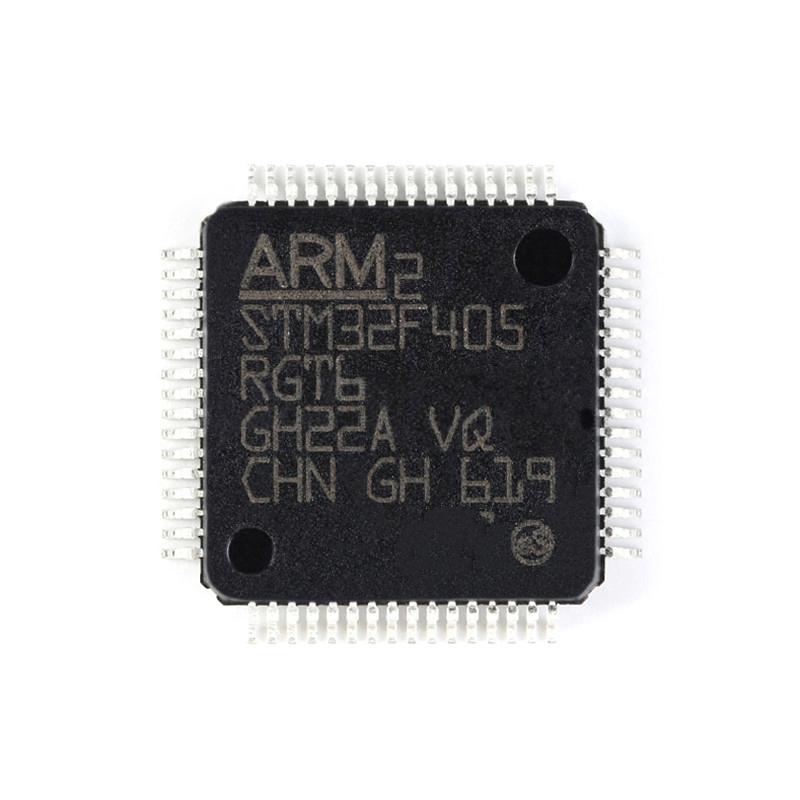
This is why the small black component that people call a "chip" is actually the final packaged form of a much more complex semiconductor structure.
Chip, Die, Package, and IC: Understanding the Terms
These terms are sometimes confusing for people who are new to electronics.
The die is the small piece of semiconductor material containing the actual integrated circuit.
The package protects the die and provides external electrical connections.
The IC refers to the integrated electronic circuit implemented on the semiconductor.
The word chip is often used broadly and may refer to the die, the packaged IC, or the semiconductor device as a whole, depending on context.
For example, when someone says "the computer chip is damaged," they are usually talking about the packaged semiconductor component on the PCB rather than the bare silicon die.
Why Are There So Many Different Types of Chips?
Modern electronic products have many different requirements. One chip cannot efficiently perform every possible function.
A processor needs to execute instructions. A memory device needs to store data. A voltage regulator needs to manage power. An RF chip needs to process high-frequency signals. An audio codec needs to handle audio information.
Each application requires a different circuit architecture.
This is why the semiconductor industry produces thousands of different IC families and millions of individual part numbers.
Some chips are designed for extremely high performance. Others are optimized for very low power consumption. Some prioritize accuracy, while others prioritize low cost, high temperature operation, high voltage, high current, or long operating life.
In other words, the variety of types of chips reflects the variety of problems that electronic systems need to solve.
Chips in Smartphones
A smartphone is a good example of how many different chips can work together.
The main processor or SoC handles computing tasks. Memory chips provide temporary and permanent data storage. Power-management ICs regulate battery power. RF devices handle wireless communication. Display and touch controllers manage user interaction.
Camera systems use image sensors and image-processing circuits. Audio systems use amplifiers, codecs, and signal-processing devices.
Even functions that appear simple, such as charging the battery or detecting a fingerprint, may require dedicated semiconductor components.
The smartphone therefore demonstrates the real meaning of an integrated electronic system: many specialized chips working together to create one product.
Chips in Cars
Modern vehicles contain a large number of semiconductor devices.
Engine control systems, transmission systems, braking systems, airbag controllers, infotainment systems, lighting systems, battery management systems, driver-assistance functions, and communication systems all depend on electronic circuits.
Electric vehicles increase this dependence even further because battery management, motor control, power conversion, charging, and thermal management require sophisticated electronics.
This makes automotive semiconductor technology one of the most important areas of modern chip development.
Chips in Industrial Equipment
The use of chips is not limited to consumer electronics.
Industrial chip applications include factory automation, motor control, robotics, sensors, programmable controllers, power supplies, measurement equipment, communication systems, and safety systems.
Industrial applications often place special demands on chips. Designers may need extended temperature ranges, long product lifecycles, stable supply, high reliability, noise resistance, and strong electrical protection.
Therefore, selecting a chip for an industrial system can be very different from selecting one for a low-cost consumer product.
How to Choose the Right Chip
Choosing an IC should begin with the function that the circuit needs rather than the part number itself.
A practical selection process includes several questions:
- What function must the chip perform?
- What supply voltage does it require?
- What operating temperature range is necessary?
- How much current does it consume?
- What input and output interfaces are required?
- What level of accuracy or performance is needed?
- What package can the PCB support?
- What speed or frequency is required?
- Does the application require special protection?
- Is the component available for long-term production?
For industrial and automotive applications, engineers should also consider qualification requirements, reliability data, lifecycle information, and supply-chain stability.
The Difference Between Chips and Discrete Components
It is useful to compare an integrated chip with discrete electronic components.
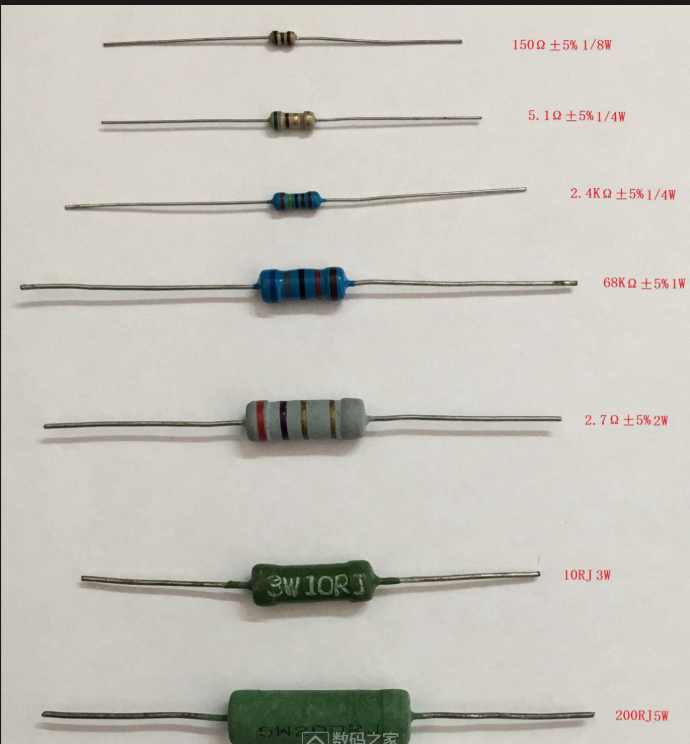
A discrete transistor is generally an individual semiconductor device. A discrete diode performs a specific semiconductor function. A resistor provides resistance, while a capacitor provides capacitance.
An IC combines multiple circuit elements into a single device.
For example, instead of building an amplifier using several individual transistors and passive components, an engineer can use an operational amplifier IC that integrates much of the required circuitry into one package.
This does not mean discrete components have become unnecessary. Resistors, capacitors, diodes, inductors, transistors, and other discrete components are still essential in many electronic designs.
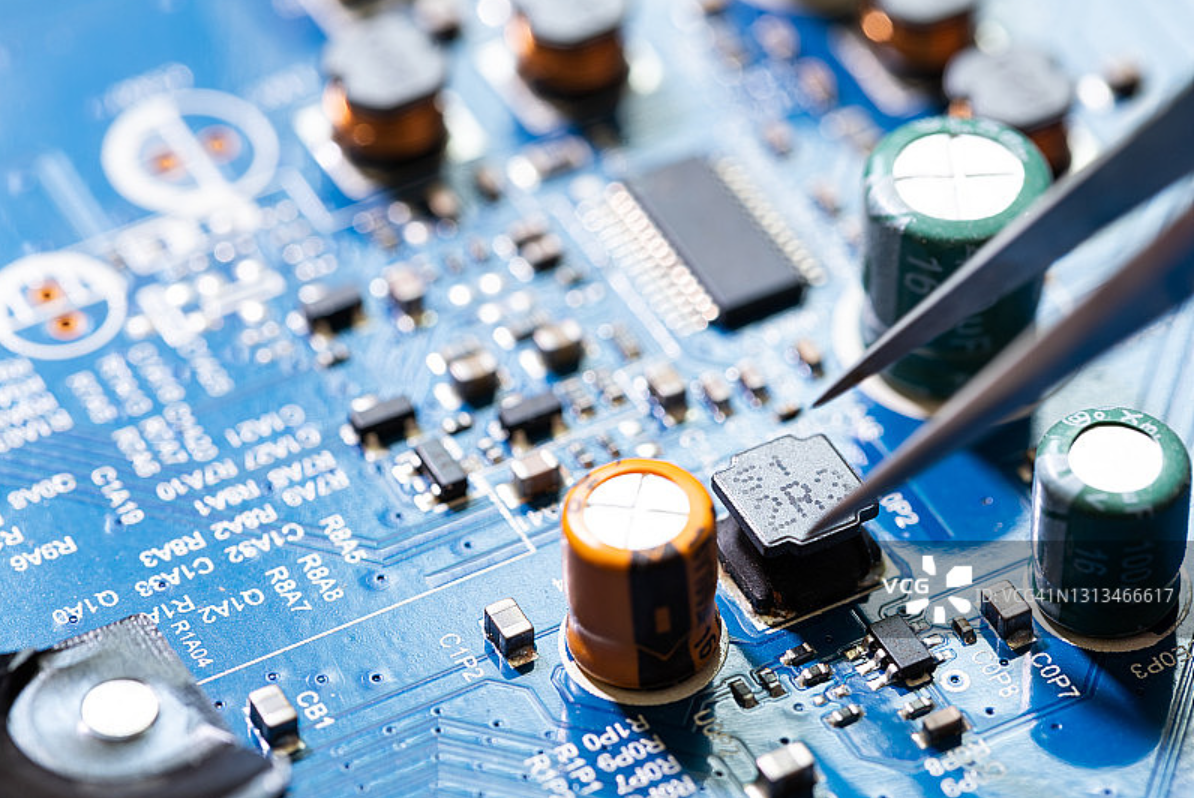
The modern circuit board is usually a combination of ICs and discrete components, with each selected according to its role.
Why Chip Size Does Not Tell the Whole Story
A common misunderstanding is that a physically larger chip must be more powerful than a smaller one.
That is not necessarily true.
Chip performance depends on architecture, transistor technology, clock frequency, memory structure, number of processing cores, power limits, software optimization, and many other factors.
A small modern IC may contain billions of transistors, while a physically larger component may perform a relatively simple function.
Therefore, physical size alone is not a useful measure of semiconductor capability.
The Future of Integrated Circuits
As electronic systems become more intelligent and connected, the role of integrated circuits continues to expand.
Artificial intelligence is increasing demand for specialized processing hardware. Electric vehicles require advanced power and control chips. Industrial automation needs sensors and controllers. Data centers require high-performance processors, memory, networking devices, and power-management solutions.
At the same time, semiconductor designers are working to improve performance while controlling power consumption and manufacturing cost.
The future is not simply about putting more transistors onto a chip. It is also about better architecture, improved energy efficiency, specialized computing, advanced packaging, faster communication, and closer integration between hardware and software.
Frequently Asked Questions About Chip Definition
What is a chip in simple words?
A chip is a small semiconductor device containing electronic circuits. It can process information, store data, control a system, manage power, or perform another specific electronic function.
What does IC stand for?
IC stands for Integrated Circuit. It is a circuit in which multiple electronic components are integrated onto a semiconductor substrate.
Is a chip the same as an IC?
In everyday electronics language, the terms are often used interchangeably. Technically, an IC refers to the integrated circuit, while chip is a broader term commonly used for a semiconductor device or its silicon die.
What is an integrated circuit?
An integrated circuit is a semiconductor-based electronic circuit containing multiple interconnected components manufactured together on a small piece of material, usually silicon.
What are the main types of chips?
Common types include microprocessors, microcontrollers, memory chips, analog ICs, digital ICs, mixed-signal ICs, power-management ICs, RF chips, sensors, and system-on-chip devices.
What is a computer chip?
A computer chip is a semiconductor device used for computing, memory, control, communication, or other functions within a computer system. A CPU is one type of computer chip, but it is not the only type.
Why are integrated circuits important?
Integrated circuits allow large numbers of electronic components and functions to be placed into a very small area. This makes modern electronic products smaller, faster, more capable, and often more energy efficient and reliable.
Final Thoughts on Chip Definition
The simplest chip definition is that a chip is a small semiconductor device containing electronic circuits designed to perform useful functions. However, this simple definition represents an enormous field of technology.
An IC, or integrated circuit, can contain anything from a few circuit elements to billions of transistors. Some chips store information, some process data, some control machines, some manage electrical power, and others connect devices through wired or wireless communication.
The term integrated chip emphasizes the idea of putting many electronic functions into a compact semiconductor device. The term computer chip usually refers to chips involved in computing, processing, memory, or system control. Meanwhile, the many different types of chips exist because modern electronic systems have very different requirements.
The most important idea to remember is that a chip is not simply a small piece of silicon. It is the result of combining semiconductor materials, transistor technology, circuit design, manufacturing processes, packaging, and system engineering into one highly integrated component.
From smartphones and computers to electric vehicles, industrial machines, communication equipment, medical devices, and smart appliances, integrated circuits provide the electronic intelligence that makes modern technology possible.
Understanding what a chip is and what IC meaning represents is therefore more than learning a technical definition. It is the starting point for understanding how the modern electronic world works.